Showing posts with label young adult fiction. Show all posts

Saturday, 5 September 2015

Recent Review Round Up - Holiday Reading

Its'a amazing how many books you can go through when you give you brain a week off from everything else. Ok, so three and a bit books in two weeks might not sound like very many, but this is pretty impressive for my easily distracted brain right now. I'll start doing the odd full review again soon, but in the mean time here are three reads that got me thinking this summer...


The Paying Guests - Sarah Waters

The Paying GuestsThis is the first Sarah Waters book I've read and it certainly won't be the last. Is that enough of a review do you think? If I don't end here then I'm in danger of offering you up an essay about it, but I shall continue and try to keep it brief. I've made a resolution to start reading a bit more adult fiction, and this book has set the bar, quite frankly - a masterclass in how to write a well-drawn, living breathing character. I was slightly daunted by the length (as I said, I get easily distracted), but there wasn't a single wasted word. The story of how the arrival of Lilian and Leonard impact on the formerly well-to-do Frances Wray and her mother is tense and romantic in equal measure.

Am staring to think I should have written a full review of this because now, as I'm typing, I have ALL THE THOUGHTS. Oh well.


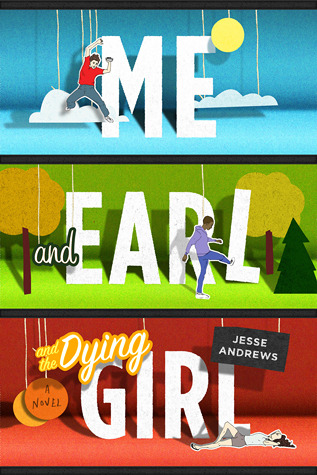
Me and Earl and the Dying Girl - Jesse Andrews

Me and Earl and the Dying GirlI'm conflicted about this one. I enjoyed it. It was smart and funny (very funny) and refreshing, and I wish there was some way to bottle that feeling you get when you read something truly unique in YA fiction (sorry, but it just doesn't happen that often). I just wasn't entirely convinced by Andrews's attempts to subvert a the common dying teenager YA trope. It just felt like he should have pushed the button a bit more - tricky, I know - because I was just left with the feeling that the book hadn't quite managed to detach itself completely with that particular trope and that it had shied away from a few issues it touched upon. But whatever drawbacks I had with it, the voice is one of the most convincing I've read in recent months.


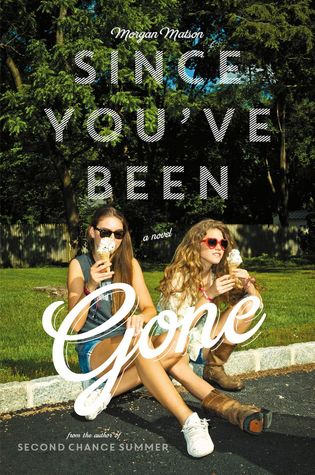
Since You've Been Gone - Morgan Matson

Since You've Been GoneI enjoyed Roger and Amy's Epic Detour and I was looking for a good contemporary YA to get my teeth into. This had been sitting on my kindle for a while and seemed to fit the bill. However, I was THIS (imagine me holding up my fingers to indicate a short distance) close to giving up on it about half way through - shy Emily may have felt realistic, but my patience with her as a main character was starting to wane, I still hadn't gotten any sense of who her missing best friend Sloane really was and the flashbacks felt cumbersome. BUT, exactly slap bang int he middle, it drew me in and I started to care, really care, about all of them. I adore YA books about complicated friendships and I'm happy to say this one ended up being incredibly moving. Plus, there were also some excellent playlists hidden in these pages (although I much preferred Frank's taste in music to Emily's - sorry country fans).


Wednesday, 17 June 2015

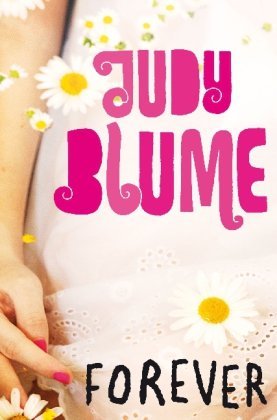
Judy Blume Readalong - 'Forever'

I see the words 'Judy Blume readalong' crop up on my Twitter feed and my first thought is I'M THERE. Wouldn't that be everyone's first thought, surely? I had planned on my own read through of the Blume's back catalogue last summer after going to her talk at Waterstones in Piccadilly, but I only got as far as Tales of a Fourth Grade Nothing swiftly followed by Superfudge. Might get around to writing those reviews one of these days...

Anyway, when I saw Keris Stainton had organised a Judy Blume readalong in preparation for the author's appearance at YALC in July, I was grabbing my copy of Forever off the shelf before you could say 'no, I really don't want to take a look at Ralph thank you', because, yes, the first book to be read was Forever, and the Twitter hashtag was #readalongralph. Anyone who read this book in their youth (or indeed their adulthood) knows all about Ralph.

RALPH.

My own memories of Forever are vague to say the least. I remember Ralph, of course, and I remember the rug and the events which took place on the rug but other than that, it was all a bit hazy. Basically I remember the sex. When I first encountered this book I was about 11 and I couldn't quite believe there was a book that talked about willies, and now, as a 35-year-old reading this is 2015, I'm still struggling to get my head around that fact. It's so strange to think that a YA book written and published in the 1970s with this much frank sexual content probably wouldn't be published now (or would it? My instincts think not. Maybe I'm wrong). Does this mean we're regressing, or that teens want less-in your-face sex in their books? Or that (more likely) we're underestimating teenagers' abilities to grasp the realities of sex, downsides and all?

ForeverThis leads me onto the book itself. There is a lot to love about Forever, but I'm not entirely convinced it worked as whole. I remember when I went to her talk last year, she said she wanted to write a book about teenagers having sex where no one died, and this is the thing I appreciated most about it - a realistic depiction of teenage sex that feels just as relevant now as I imagine it would have done when first released, and the fact that this sort of frankness isn't rally found in most contemporary YA means Forever is even more vital today. I loved the trademark Blume sense of humour, the rich selection of engaging supporting characters and perhaps most of all, I loved the positive depictions of women and girls - a grandmother who once ran for Congress, a supportive best friend who's mother is a leading film critic, a anthropologist sister - all this is depicted in a very naturalistic way, just as it should be, because it is natural to be surrounded by strong, clever, supportive women.

But the fact that these supporting characters were so well depicted shines a light on the shortcomings of Katherine and Michael. They were just a little bit dull in comparison. Katherine made a lot of mature decisions but I never really understood what she saw in Michael. It's never really explain why he is THE ONE, the only really indication being that she loves him because he shows an interest in her - realistic, perhaps but still not very satisfying from a reader's point of view, and I think that same sentiment can be used to sum up Michael too.

PRECIOUS
Forever still feels like a very important book and I'm glad I revisited it. However, in writing a book about sex, some other things that would have made this a better read, like plot, took a back seat. So a vital book, yes, but by no means a perfect one.

Just quick request for publishers to please keep in the small, beautiful reminders that this is a period piece in future editions - Katherine's brushed nylon nightdress, her joy at the mushrooms embroidered onto her jeans, a teenagers' fondue party (although perhaps this would happen today in an ironic way) and the icing on the cake, Theo and his glorious moustache.

Long live Theo and his glorious moustache!


Wednesday, 10 June 2015

YA REVIEW: 'This is Not a Love Story' - Keren David (Atom, 2015)

Kitty dreams of a beautiful life, but that's impossible in suburban London where her family is haunted by her father's unexpected death. So when her mum suggests moving to Amsterdam to try a new life, Kitty doesn't take much persuading. Will this be her opportunity to make her life picture perfect? In Amsterdam she meets moody, unpredictable Ethan, and clever, troubled Theo. Two enigmatic boys, who each harbour their own secrets. In a beautiful city and far from home, Kitty finds herself falling in love for the first time. But will love be everything she expected? And will anyone's heart survive? (Synopsis from Goodreads)

This is Not a Love Story
It's no secret that I love Keren David's books (see here and here) - I don't think there's any other author that nails the British teenage experience quite like she does. Although I've haven't reviewed it here, her previous book Salvage manages to balance realistic characters, engaging plot and heart-rending issues, something that I imagine is far trickier than it looks. I hate describing reads as 'issue' books, because it somehow feels like a disparaging comment rather than a compliment, with an automatic assumption that for a book to deal with tough or diverse issues, it has to sacrifice something in terms of plot or character. Ok, this has been true of some books but as This is Not a Love Story shows, just as Salvage did, it's more than possible to write about issues without sacrificing anything at all.

This where the similarities with Salvage end, however. Whereas that previous book put me through the emotional ringer by confronting some of the darker parts of society, This is Not a Love Story beams positivity and is one of the most refreshing books I've read in a long time. In fact, I can't think of anything it really falls into the same bracket as at all. Kitty's optimistic outlook on life is infectious and seeps through every page. I adored Kitty, but then I adored Theo and Ethan too - can't actually choose between them and wouldn't want to! This is the most realistic depiction of modern teens I've read in a long time - they're funny, emotional, they don't always have all the answers and they make mistakes, but then they move on. Their small expat community reminded me a lot of my gap year interactions many moons ago - you arrive in a new place, you fall in with a group and you get along with people no matter what your differences.

This is the first YA book I've read about Judaism and I loved the way it was presented as both a uniting force and common ground between Kitty and Theo, but also showed how religion isn't one dimensional - their upbringings had more differences than they did similarities and this connection wasn't the be all and end for them. Also, a shout out to the structure of the story - the added element of mystery ensured this a proper, bonefide page turner.

So whereas This is Not a Love Story isn't a love story (or is it?...), this review definitely is - a love story between woman and book (imagine a heart emoji right here - I don't how to do one on my desktop, sorry).

Saturday, 6 June 2015

Past on Paper: 1950s YA REVIEW - 'Out of the Easy', Ruta Sepetys (Speak, 2013)

It’s 1950, and as the French Quarter of New Orleans simmers with secrets, seventeen-year-old Josie Moraine is silently stirring a pot of her own. Known among locals as the daughter of a brothel prostitute, Josie wants more out of life than the Big Easy has to offer. She devises a plan to get out, but a mysterious death in the Quarter leaves Josie tangled in an investigation that will challenge her allegiance to her mother, her conscience, and Willie Woodley, the brusque madam on Conti Street. Josie is caught between the dream of an elite college and a clandestine underworld. New Orleans lures her in her quest for truth, dangling temptation at every turn, and escalating to the ultimate test. (Synopsis from Goodreads)

Out of The Easy
I'm resurrecting my Past on Paper feature! Hurrah! And seeing as this book is set in 1950 then it will hopefully be the first of many more 20th century-set book reviews (the books are set in the 20th century, not the reviews, obvs).

I've been on a historical fiction binge at the moment which inevitably led me to this. Unlike pretty much everyone else in the universe, I've haven't read Ruta Sepetys debut, Between Shades of Gray so I was coming to this one without any preconceptions apart from perhaps the irresistable-sounding synopsis - I mean, hello? 'Mysterious death', New Orleans in 1950 - how could anyone NOT be excited by this?

I'm happy to say it didn't disappoint in the slightest. In fact, it might just be one of my favourite pieces of historical fiction, YA or otherwise. This is largely down to the expertly balanced combination of intriguing plot, brilliant protagonist and a coming of age tale that got right under my skin. This is a YA that isn't afraid of the seedier sides of life, with sex, power and frustration filtering through it's every paragraph. 

There is an impressive array of complex supporting characters. Much like she has used this historical setting to bring an authentic background to the story, I feel like Sepetys has done the same with all the players in this tale - from Josie's various surrogate parent figures in the form of brothel madam Willie, driver Cokie and bookshop owner Charlie Marlowe, to the characters who drift in and out of the story in a way to create a richer picture. Without going into spoiler territory, the romance element feel almost like a bonus, not integral to the story, more like a happy side effect, and it was all the more refreshing because of this.

However the very best thing about Out of the Easy was Josie. The description 'bad ass book lover' may sound a bit cringey but it perfectly sums her up. More than aware of the cards her upbringing has dealt her, she remains focused and determined, using her experience of the slightly seedier side of the tracks to push her own agenda. 

I'd just like to thank Ms Sepetys for writing a book that bought me out of my reviewing slump and given me a renewed appreciation for the intricacies and power of great historical fiction (and great mysteries).

(Thanks to my old local bookshop, I have a copy of the US edition, rather than the UK, hence the photo)

Wednesday, 30 July 2014

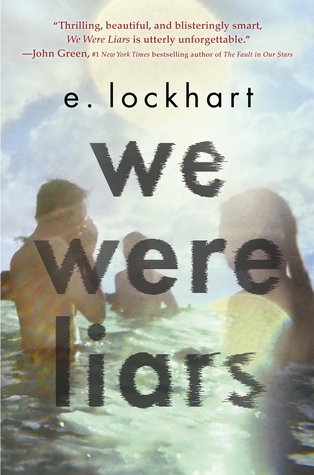
YA REVIEW: 'We Were Liars' - E. Lockhart (Hot Key Books, 2014)

Three cousins, Cadence, Johnny and Mirren, along with outsider Gat, make up the four Liars. The cousins are Sinclairs, born into privilege and promise and every summer they congregate on the family's private island. After a terrible accident, a damaged Cadence has to sift through the murky waters of her extended family to find out the truth about the incident...

We Were LiarsWhen I finished this, I stated on Goodreads that I probably wasn't going to write a review because the less you know about this book before you read it the better. Even though I didn't know any concrete facts, I had heard whispers on the breeze and even whispers can do damage to a reading experience such as this. But then certain books live on in your head long after you've finished them and they deserve to be praised. I've successfully managed to write a spoiler-free review of a book before, a similar sort of book that requires spoiler-free reading and I think I did an alright job if I say so myself. So here goes. If you really, really don't want to know anything else about We Were Liars before you start it, I suggest you stop reading here (but only after I've said you really need to think about starting it very soon)...

I'm rubbish with books that are steeped in hype. I become a very cynical sort and even more judgey than I usually am (not something I'm particularly proud of) but this makes it all the more satisfying when a book does live up to all the praise. Let's start off with the best thing about We Were Liars - the writing. It's sparse, but I like sparse. Why use five words when you can use one? And because this style is so uncompromising, the voice is too and I don't think it needs pointing out that this is a Very Good Thing indeed (but I will anyway - it is a Very Good Thing). Cadence is the perfect character to lead us through the lives of the Sinclair family - revered, but enough of an outsider to show them warts and all.

From my own experience, there is not much to relate to with the wealthy Sinclairs but as with all good storytelling, this didn't matter a jot. This may have been a book about rich white dudes but it was also a book about prejudice and the abuse of power and love, common themes in many novels but here used in a very clever way. It felt very old-fashioned in some ways, perhaps to do with the setting. On starting it, I kept getting flashbacks of scenes from Dynasty, but here there were less shoulder-pads and more shabby-chic preppiness. I guess this is all testament to the strength of the writing again and her amazing ability to build this world of privilege in such amazing and convincing detail.

There were a few things that made it not quite perfect - it slowed down quite a lot in the middle for me (that's all I will say about this because to say anymore would be alluding to those whispers on the breeze mentioned above) and I would have enjoyed a bit more detail about the other Liars at the beginning. This is quite a quick read and we're thrown into the middle of events early on - as a consequence, it took me a little while to get to grips with some of the characters.

But these are minor gripes. We Were Liars deserves all the attention it's been getting. It is a clever, involving story with plenty of mystery, and I'm all for clever stories, especially when they are told this well.


Saturday, 5 July 2014

Recent Review Round Up

In lieu of about six month's worth of reviews, I bring you one big post containing some of the stuff I've enjoyed recently. You may have noticed that this is not a 'YA Review Round Up' because it is not exclusively YA (trying to broaden my reading a bit here). But it's still mostly YA. There's no way I'm cutting down the YA intake.


Shadowplay (Micah Grey, #2)If you remember my review of Pantomime then you've got a great memory - well done. If not, the gist was that I loved it and it brought me out of a reading slump so top marks all around. So of course I read the sequel Shadowplay and loved that too - more Micah, more Drystan, more magical sexual tension than you could shake a stick at (not that I would shake a stick in the face of sexual tension - that would be very odd behaviour). As a result of my love for these, I was very sad to hear that the publisher of these fine books, Strange Chemistry, was folding. However, I also love a good silver lining and the author Laura Lam has already self-published a short story, The Snake Charm about Drystan before he met Micah, with more stories to follow and perhaps a third book in this series...


This is Not a TestI'm not quite sure how I can sum up reading a Courtney Summers book. I finished Cracked Up to Be a while back and I barely said a word about it because I couldn't form a coherent sentence that summed up my feelings, apart from perhaps 'I would saw off my right arm to be able to write a book like this.' Jo buys the best presents and she didn't let me down at Christmas with a copy of This is Not a Test. Just read it. Please. You'll know what I'm on about then. Oh, and there's going to be a sequel.

THERE'S GOING TO BE A SEQUEL


Dead Man's Cove (Laura Marlin Mysteries, #1)I've been increasingly drawn to middle grade books (do we call them middle grade in the UK? Apologies if we don't) and they've been another thing that has rescued me from many a reading slump recently. My eldest daughter is just getting to an age where she's starting to enjoy chapter books and I'm getting great satisfaction out of stockpiling titles that I'll probably foist upon her at some point in the future. First one? Dead Man's Cove by Lauren St. John. Think Enid Blyton but as contemporary as they come. I would have adored this when I was nine or ten because I adored it when I read it a couple of weeks ago. Proper good mystery, topical, beautifully written, just ace.


Dead RomanticI'd been meaning to start a book by CJ Skuse for ages because she is one of the funniest people on Twitter and now I feel stupid for leaving it so long - Dead Romantic is very amusing, very British, very icky and very very very very very good. A YA contemp with an undercurrent of The League of Gentleman, if you can imagine such a thing. Go read now please.


TroubleTalking of YA contemp, if you haven't read Trouble by Non Pratt yet, I think you need to have a good long think about your life choices. Please do not think this is an 'issue' book and you must therefore avoid. Because as we all know, when books that are written about the big stuff (teenage pregnancy in this case) are well written (as in this case), then that's a good as books get (as in this case).


The Cuckoo's Calling (Cormoran Strike, #1)Do you remember where you were when you found out that Robert Galbraith was none other than JK Rowling? Ok, so we didn't have a clue who Robert Galbraith was but still, the news that she had written a crime novel was a welcome one. It took me a criminally long time to get around to reading The Cuckoo's Calling but as I suspected, she does this sort of thing very well indeed. And the fact that a novel written by JK Rowling contains the word 'pubehead' pleases me greatly.


Beautiful RuinsBeautiful Ruins was the first bit of literary fiction I'd read in quite a while and it was my 'dipping into when on the bus or tube' book. It wasn't until about a third of the way through that I really started to get lost in it and this is why I don't read literary fiction that much anymore - I have the attention span of a gnat these days - but then again, it makes it all the more satisfactory when a title holds me within it's grip like this one did. And it made me cry on the bus. 'Nuff said.


Better finish here because this post is getting far too long but I promise I'm going to start writing proper reviews again soon...


Friday, 3 January 2014

Guest Post: Jeff Norton, Author of the MetaWars Series

Displaying MetaWars4_BlogTourBanner1.jpgA little while ago, I reviewed the first book in the MetaWars series, a interesting and fast-moving take on the dystopian genre. Well, now that series is coming to an end with the release of the fourth and last book, so today, I welcome the author Jeff Norton, to talk about the mixed feelings that come with saying goodbye to characters after a long journey together...


Jeff NortonI’ve spent the past four years with my characters.  And now it’s time to say goodbye.

Characters occupy a strange part of a writer’s brain, an uncharted netherworld somewhere between dream and reality.  To me, these people are real. I see them. I hear them. But to everyone else, they are fictional constructs that exist only on the page.

My greatest hope is that Jonah and Sam become as real to the reader as they are to me. They’ve already made the great leap from my brain to the page.  And now they exist on their own, for readers to meet and inspect and analyze.  I’ve done what I can. It’s up to them to make the final jump from page to heart, to take up residence in some small corner of the reader’s life. 

Metawars: The Freedom Frontier (Metawars, #4)If you’ve read the MetaWars novels, you’ll know that immortality is a central theme of the books.  In the world I’ve created, people yearn to live forever in a digital way – “Uploading” their consciousness to the internet in order to outlive their mortal bodies – digital immortality.  And I suppose that’s what I hope to achieve for my characters. 

Long after I’m gone, like authors of long gone generations, I hope that future readers will discover Jonah’s quest, his troublesome coming of age in a confusing world, and his friendship with Sam, and the two main characters will live anew in the mind of those unknowable, future readers.  Likely, they’ll read the books in some digital form that we haven’t yet dreamed up, and not on paper, and in that way, reality will mirror fiction: Jonah and Sam will achieve their digital immortality.  They will outlive me, outlive their current physical (paperback) form, and jump from generation to generation along a digital spectrum.  And if they do that, they can truly live forever and my “goodbye” will not final.


Thank you so much Jeff for sharing this rather moving take on well-loved characters. And I'll be reviewing some more of the MetaWars book in the very near future...

Jeff Norton is the author of the MetaWars saga from Orchard Books.  The final installment, MetaWars 4.0: The Freedom Frontier publishes 2nd January, 2014.  Find Jeff on the web at www.jeffnorton.com, twitter at www.twitter.com/thejeffnorton and facebook at www.facebook.com/thejeffnorton.


Friday, 13 December 2013

Past on Paper - 1940s Review - 'That Burning Summer', Lydia Syson (Hot Key Books, 2013)

Romney Marsh, July 1940. When invasion threatens, you have to grow up quickly. Sixteen-year-old Peggy has been putting on a brave face since the fall of France, but now the enemy is overhead, and the rules are changing all the time. Staying on the right side of the law proves harder than she expects when a plane crash-lands in the Marsh: it's Peggy who finds its pathetic, broken pilot; a young Polish man, Henryk, who stays hidden in a remote church, secretly cared for by Peggy. As something more blossoms between the two, Peggy's brother Ernest's curiosity peaks and other secrets come to light, forcing Peggy and Henryk to question all the loyalties and beliefs they thought they held dear. (Synopsis from Goodreads)


Quick warning: the odd spoiler on the horizon folks...

That Burning SummerWith that amazing title and a synopsis that strongly hints of a secret wartime love affair, you'd be forgiven for thinking that this book is an out-and-out romance. Ok, it is a bit of an out-and-out romance, but as much as I adored this particular relationship and the mammoth objects put in its path, the thing I took away was a different sort of fire - having the strength to cope with the day-to-day realities during some of the most difficult and tense events in history.

As with her previous book, Syson's writing takes a particular point and place in the past and opens it up in a way I don't think I've come across in YA before. All the research and attention to detail is evident, yet it never feels like you're sitting through a history lesson. Or maybe just like you're experiencing the best history lesson ever. This book not only sheds light on the contribution of Polish pilots to the war effort, but also the story of those who chose to stand by their pacifist principles in the face of overwhelming pressure and the ripple effects this had on their families. I was initially a bit apprehensive about the large part Peggy's younger brother Ernest appeared to be playing in the story ( just wanted to get to the kissing bits to be honest), but his journey and how this tallied with Henryk's experiences, ended up being my favourite part of the book. This is a tale about a different sort of war time bravery - of coping with overwhelming mental as well as physical hurdles as well as standing up for beliefs in the face of public opinion and convention. But with all the complex issues floating about, there is still a strong and powerful chemistry between Peggy and Henryk that was a  joy to read. Some of the scenes actually made my page CRACKLE, I swear. 

As with all the best historical fiction, this provides a new perspective on a period that has been depicted on paper many, many times before. It's a very welcome addition to the growing number of YA books set during this period that I've had the pleasure to read in the last couple of years. Not only does it make you think AND swoon, but there's also does a rather good sideline in suspense too. Oh, and the cover's ace as well. Seriously, what more could you want? 

If it turns out you DO want more, then have a read of my interview with Lydia Syson in which she discusses writing historical young adult fiction and the presence of politics in YA. You're welcome.


Tuesday, 26 November 2013

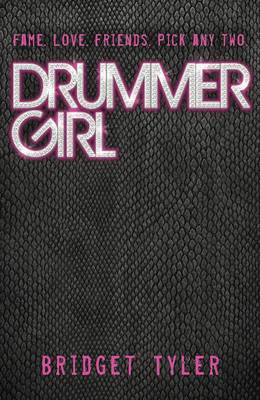
Interview: Bridget Tyler, Author of 'Drummer Girl'

You may remember my review of Drummer Girl from a weeks back - this addictive tale of a group of London school girls winging their way to LA to take part in a reality show is a great page turner with the snappiest of snappy dialogue. Today I welcome author and screenwriter Bridget Tyler to my blog to chat about pop culture, friendship and happy endings in YA...


What first drew you to writing for young adults and what were your favourite reads at this age? 

-         I love writing for Young Adults because I think great stories about growing up have more impact on us over the course of our lives as readers than any other kind of book. I still remember the books I loved when I was a teenager vividly – The Chronicles of Prydain by Lloyd Alexander, the Nancy Drew series, The Dark is Rising series by Susan Cooper, anything by Anne McCaffrey, Harry Potter… the list goes on. Those characters, and their journeys, helped me understand and survive my teenage years and I will never forget them. If I can tell just one story that makes someone else feel that way, then I will consider myself a success.


        Pop culture and current trends are a major part of Drummer Girl – what do you think are the pros and cons of writing about music in YA? 

-         Obviously, anything related to pop culture is dangerous in a book because it is bound to be out of date in a heartbeat. That’s why, as much as Drummer Girl takes place during a reality competition, I worked hard to avoid too many references to contemporary pop culture. You’ll notice as you read that most of the specific references made to bands are either to icons like Madonna and the Beatles, or to fake bands that only exist in the world of Drummer Girl. I even tried to stick to fairly classic styles when mentioning clothes, hair and make up while still being on trend. I used the framework of reality television and the music business, but I really wanted to be sure Drummer Girl was also about these five girls and their friendship not about the world they find themselves in.


Drummer Girl        You’ve clearly got a knack for both authentic US and UK dialogue – how does writing dialogue for novels differ from screenwriting?

 -       Not much, actually. Whether I’m writing a book or a screenplay, I read the piece out loud to myself many, many times before it’s finished. It’s really the only way to tell if dialogue is going to ring true or not, at least for me. The biggest difference with the dialogue in a novel is that you don’t have to make the characters say as many things out loud. In a script, I might need a character to say, “Wait. Mum can’t possibly know we cut school last week. She spoke to Mrs. James this morning and neither of us is grounded. What are you up to?” because otherwise the audience has no way of knowing what’s happening in the character’s head.  In a novel, I might do this instead:

Molly stopped short, starring at her sister as she dug through her dresser drawers. No matter what Jane said, Mum couldn’t possibly know that they’d cut school. She’d spoken to Mrs. James this morning and everything. They’d be beyond grounded if either had a clue. So what was Jane up to?

See the difference? Finding organic and natural ways for characters to say what they’re thinking out loud is actually one of the most challenging aspects of screenwriting.


Friendship is a strong theme in Drummer Girl – do you think this is something we should be seeing more of in YA and what other themes do you think deserve more attention? 

-         Yes, I think friendship, particularly female friendship, is highly under utilized in YA and in storytelling in general. Friends are such an important part of the growing up experience – good friends make everything so much better and bad ones can be downright dangerous, in the wrong situation. Romance is fun, and there’s a lot of that in Drummer Girl too, but it isn’t the only kind of relationship out there to explore. As for other topics that could use more attention, this isn’t exactly a theme but I have to say I think it’s important for YA writers to create more characters who are into science, female characters in particular. Too often math and science gets ignored, or even vilified, in teen literature. Those fields are both truly fascinating and very important for the future – we should be telling stories that encourage people to be interested in them.


        Drummer Girl has an incredibly fast-paced plot – how do you ensure that this is balanced out with strong characters? 

-         Well this is another trick that comes from screenwriting – plotting that doesn’t develop the characters is going to end up being boring and character development that doesn’t advance the plot has a good chance of ending up on the cutting room floor. The goal is to make every new twist and turn of the plot service the characters so that you don’t need to slow down and take a detour in order to develop them. 


      And finally, how important do you think ‘happy endings’ are in YA?

-        I think every story deserves the ending that best fits it. Some stories end well, some don’t. There are happy endings in Drummer Girl and very, very sad ones. And a few that are in between. That’s the way life is. The one thing I do think all stories should have is hope. I think there is a place in the world for bleak stories that lack hope for the future, but they aren’t the kind of stories I chose to tell, nor are they the kind of stories I like to read. 


I'd like to thank Bridget for taking the time out to answer my questions and in particular, those very handing tips on writing dialogue. So thank you Bridget - I'm certainly looking forward to your future YA titles! And it's always nice to find a fellow Nancy Drew fan...

Friday, 15 November 2013

I Need to Get Out More #5 - Wood Green Literary Festival

I don't normally manage to get out to literary or author events too often, so I was especially pleased to make it to a couple of events taking place as part of the Wood Green Literary Festival a few weeks back. I'm usually pretty clueless when it comes to doing write-ups (I suppose it's a good thing that I don't get the chance to do too many then), so I thought I'd take a different approach with this one as look at a few of the points raised and see how I can relate them to my own writing...


16120429The first talk was about Uncovering Ancient London and featured Lydia Syson and Catherine Johnson. Now, if you follow my blog, you'll know that I'm a big fan of Lydia's writing and you can find out her thoughts on political YA in this interview from a little while back. As you can imagine, it was very interesting to get a writer's perspective on how London history has made them tick. Catherine Johnson talked animatedly about how a trip to the Huntarian Museum inspired her to write Sawbones, a book that sounds delightfully gruesome and rich in the historical detail of the backstreets of this city. Lydia Syson talked about how she is a fifth generation Londoner, something that is quite rare this days, and how she has grown up to appreciate the rich history London has to offer, in particular, surprising facts about her family history.


That Burning SummerThis got me thinking about stories that my own family have told me. I've lived in west London on and off for the last ten years, but I was brought up in a commuter town after my parents moved away from their original west London haunt. My dad used to tell me stories about when he used to place Underground Hide and Seek on the tube with his friends as a teenager. You might be able to guess what it involved...basically, jump on a train, jump off at different stations and try to remain illusive to the person tasked to find you. I had completely forgotten about this story up until that moment, and now it's taking pride of place in my notes for something I'm planning about London set in the 1960s. It's nice to be reminded that I couldn't live anywhere better in the world when it comes to writing about the past, so thank you lovely authors!


When I Was JoeThe second talk I attended featured Keren David and Hilary Freeman discussing Edgy YA Fiction. This is of particular interest to me right as I'm currently working on a contemporary YA, although I don't know if I'd describe it as particularly 'edgy', but I suppose that was the whole point of the discussion - what does constitute edgy YA and how do you get the balance right? One of the issues that has been at the forefront of my mind recently (especially now I am at the editing stage) is swearing in YA. A while back, I read this interesting article by James Dawson which got me thinking about whether established authors are in a better position to have swearing feature in their books rather than debut novelists. However, both authors didn't think this was really the case and that all authors need to compromise to a certain extent on this depending on the market.


Lifted. Hilary FreemanWhen I first started working my MS, I was given some advice that I've always found useful - when it comes to swearing, don't censor yourself in the early stages - it's more important to get the first draft done and you can always compromise on this at the editing stage. Needless to say, my first draft was as potty-mouthed as it gets and I remember reading it back and blushing. As I'm going through my chapters now, I can appreciate that a little goes a long way in this respect. I think it's important to get my dialogue as authentic as possible (and this includes using swear words), but perhaps using too many can have the same effect as using none - it might only succeed in distracting from the story.


All in all, this was a great, informative afternoon, and I've very much looking to venturing north again next year. My only criticism would be that the talks were too short! I could have listened to them all for hours...


Tuesday, 8 October 2013

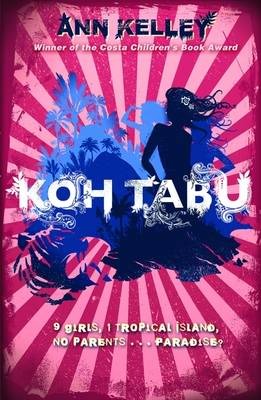
Past on Paper: 1970s YA REVIEW - 'Koh Tabu', Ann Kelley (Oxford University Press, 2010)

Fourteen-year-old Bonnie MacDonald couldn't be more excited for a camping trip on an island off the coast of Thailand with her fellow Amelia Earhart Cadets-the daughters of the men and women stationed there during the Vietnam War. But when a strong current deposits the girls on what their boatman calls the "forbidden island," things take a turn for the worse. What once seemed like a vacation in paradise has become a battle against the elements (Synopsis from Goodreads)

Gosh, this is a tricky one to review. But I shall try. You know that problem I was pondering in my last Past on Paper review? The one about whether to judge these books on how well they use their historical context? (I may have put it in a slightly more rambling, less coherent way). Well, this could perhaps be used as an example of not using your historical context to the best effect. Gah, I so wanted to love this one, because it sounded fantastic - a group of girls marooned on a far-flung Thai island in 1974. Doesn't it sound fantastic? 

Koh Tabu.Back to that old historical context thing. One of the many things that interested me about this was the time period, but if I hadn't known it was set in the 1970s, I'm not sure I would have been able to pin it down. Ok, so yes, it was set on a baron desert island, and they're not famous for their availability of cultural references, but there was very little in the voices or actions of some of the characters that felt like it they might stem from this time period specifically - more of just a general nod to the past. And I would have loved some more references to the historical events of the time too - how the war was impacting on them in particular - there were a few hints of family dramas, but this was very much a story about their current, more immediate crisis.

I think that might have been the problem, in that I was expecting so much and it just felt liked it lagged in a few areas. The story of adolescents stranded on a desert island isn't necessarily a new one, but the mention of it still promises so much drama and tension. Unfortunately, I didn't really get too much of this here. There are incredibly dramatic and sometimes tragic incidents, but I just wanted more emotion and build up. They seemed to just...happen. I've read a few books recently that have used a diary format to tell a story and I'm starting to think that this might be my problem - a lot of the immediacy of the events has been sacrificed to keep this method authentic and I don't think it really works for me as a reader.

That said, there are still some very surprising, unusual and memorable developments, including one rather beautiful, evocative encounter with a stranger, and Bonnie is an engaging guide who is fully aware of her own shortcomings as well as those of her companions. 

In some ways, this is a brilliant, original idea for a YA and the sheer nature of the girls' predicament kept me turning the pages until the end. But this didn't really work for me as a historical novel, or a particularly thrilling one.

Wednesday, 25 September 2013

YA REVIEW - 'Pantomime', Laura Lam (Strange Chemistry, 2013)

R. H. Ragona’s Circus of Magic is the greatest circus of Ellada. Nestled among the glowing blue Penglass—remnants of a mysterious civilisation long gone—are wonders beyond the wildest imagination. It’s a place where anything seems possible, where if you close your eyes you can believe that the magic and knowledge of the vanished Chimaera is still there. It’s a place where anyone can hide. Iphigenia Laurus, or Gene, the daughter of a noble family, is uncomfortable in corsets and crinoline, and prefers climbing trees to debutante balls. Micah Grey, a runaway living on the streets, joins the circus as an aerialist’s apprentice and soon becomes the circus’s rising star. But Gene and Micah have balancing acts of their own to perform, and a secret in their blood that could unlock the mysteries of Ellada. (Synopsis from Goodreads)

Pantomime (Pantomime, #1)Oh my, oh my. I remember reading a lot of glowing reviews about this one when it was first released so I feel rather stupid for only getting around to picking it up now. I've recently been in one of those mini-reading slumps. My current book was dragging me down. You know when you're ploughing your way through but really not enjoying it and every time you pretend you haven't seen it lying around, waiting to be finished, the guilt eats away at you as you reach over for the remote control and watch some mind numbing sitcom repeat that you could recite in your sleep because you've seen it so many times before?

Yeah that. This state of affairs scares me. It makes me think that I'm going off books. It makes reading feel like a chore. It is a bad business.

Which is why I chose to jump ship and start something completely different. And this one could definitely be filed under different. Or unique. Or unlike anything I've read before.You get the idea.

It's pretty special.

I'm the first to admit that I struggle with fantasy sometimes. I think it's a time thing - with books that paint a particularly strong picture, I need to be completely absorbed  fairly early on so they give me absolutely no choice - I HAVE to ignore everything else -  until I've turned the last page. Otherwise it's just not happening. I have distractions (kids etc), that will pull me off the sofa and then my relationship with that book will never be the same again and we'll probably revert to the state of affairs detailed above.

Hello book slump.

But you might have already guessed that this didn't happen with Pantomime. As well as reading those great reviews a few months back, I was also reminded about this title when I went to a seminar on LGBT characters and themes in YA. I'm afraid on this particular subject, that's all I'm going to say in relation to this book for fear of the spoiler demon striking me down with a bolt of lightening, but I can tell you that it not only manages to portray this issue in a non 'issuey' way but also does something completely unique with it.

I can't really say much else about the story - the synopsis above does a much better job of it than my garbled attempt would - but as with any book that I adore, it's the writing and the characters that are pretty much perfect here. The stories and journeys of Micah and Gene are moving, intriguing, passionate, teaming with sexual tension and heartbreaking in the best and worst possible ways. The world of the circus and Ellada is rich with gorgeous imagery, detail and intriguing supporting characters and it's one I can't wait to get back to when the sequel comes out next year.

So put aside your life for a bit and get taken over.

Monday, 23 September 2013

YA REVIEW ROUND UP

This is the first mini review-type round up that I've done. I've avoided them up until now because I'd rather just write a full review to do a book justice. However, over the summer, my reading habits became so erratic and disorganised that I'm left with no choice - if I don't write down something about these books now, then there will be no words written down about them at all, and that would be a shame. I don't post about every book I read, but I I do try to review the ones that I think I have an opinion on, good or bad, and these definitely come under that category. You might start seeing a few more of these posts from me in the future...


We Can Be Heroes - Catherine Bruton (Egmont UK, 2011)

We Can Be HeroesI had a lot to say about this one, but it's been a while since I finished it and as time goes by, it becomes a bit more difficult to articulate all those feelings in blog form. But in short, I loved it. It's so refreshing when a book manages to explore 'issues' without making it obvious that it's exploring the 'issues' - when the story and the characters take precedence over the 'issues' but never belittling their importance in the process. This deals with the after-effects of 9/11 in a bittersweet way - an interesting take on grief and present-day attitudes to race and religion with a authentic and utterly convincing voice. My only criticism is that it was a bit too long, but other than that, highly recommended for slightly younger readers.


The 5th Estate - Rick Yancey (Penguin, 2013)

The 5th Wave (The 5th Wave, #1)This is the problem with reading books that get a lot of great reviews - am I just setting myself up for disappointment? It's not that I didn't enjoy this one - it was an engrossing read, but I was expecting so much more. I don't read a lot of sci-fi, so in some ways, I don't think I'm the right person to judge, but some of the dialogue here was woeful. Think Starship Troopers, but with extra cheese. I liked the main character, Cassie and her story. That was, until a romantic element was introduced and just undermined the whole thing. He smelt of woodsmoke and chocolate. That says it all really. But my main problem was with the whole premise - as far as I could see, there was a far easier way to solve the whole 5th Wave thing than with the actual 5th Wave. I might continue with this series, I might not.


Hollow Pike - James Dawson (Indigo, 2012)

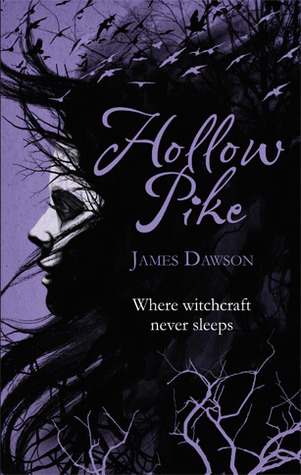
Hollow PikeReally enjoyed this one. In theory, I love mysteries. I grew up reading them. But for some reason, I've always been a bit weary about YA mysteries or ghost stories. Perhaps because there's nothing worse than a disappointing ending. But this one was more than satisfactory. Much more, in fact. Great characters, although I would have loved a bit more of Kitty, Delilah and Jack and I didn't have a clue what was going to happen next. Had a real Scream feel to proceedings, which in no bad thing in my opinion.

Monday, 9 September 2013

YA REVIEW - 'Tomorrow, When The War Began', John Marsden (Quercus, 2011) (first published 1993)

When Ellie and her friends return from a camping trip in the Australian bush, they find things hideously wrong — their families are gone. Gradually they begin to comprehend that their country has been invaded and everyone in their town has been taken prisoner. As the reality of the situation hits them, they must make a decision — run and hide, give themselves up and be with their families, or fight back. (Synopsis from Goodreads)

Tomorrow When the War Began (Tomorrow, #1)
I can't believe I'm saying this but I'd completely forgotten about John Marsden. Ridiculous, I know. The first book I'd read of his was when I was living in Brisbane, near a local library stocked to the hilt with titles from this Australian YA genius, so I had my pick of all the beautiful words. His contemporary stuff (ok, it's not strictly speaking up-to-the-minute contemporary) rocked me to my very core, making it even more astonishing that he'd fallen off my radar over the last 18 months. So when I saw the Kindle edition of probably his most famous book (is this his most famous book? Any Aussies out there, please feel free to correct me) on offer, all the feels came flooding back. I was surely in for a guaranteed gripping read, wasn't I? Well...

I was a bit disappointed with this one to be honest. It pains me to admit it, but there were times when it became a bit of an effort. How is this possible from such a brilliant wordsmith? And a brilliant wordsmith doing dystopian? Sure, there was plenty of the fantastic trademark prose peppered across the chapters, but I felt so let down by how this story panned out. Choosing to write in a diary format didn't really help with the development of the plot and the characters. We do get to know Ellie really well, and I loved Ellie - so self-assured and confident and comfortable in her own skin - but with such a large cast, most of the others blended into the back ground, especially the girls. We're given scant outlines of their personalities, but shown very little evidence of them in action, especially the best friend Corrie. The boys were slightly better developed, but I never felt a connection or empathy with any of them. Kind of a weakness in a story which uses a strong group dynamic as its base.

Another disadvantage of using Ellie's diary to convey the action was that I was left with no sense of tension or danger. For example, at one point Ellie is writing down how Robyn recounted her escape from the soldiers. A fairly dramatic incident you might imagine - and yet their in no drama whatsoever, because we know Robyn is safe because she is there telling the story! And sometimes, the whole thing felt a bit like I was reading a Bear Grylls-style survival handbook - pages and pages of detailed dialogue describing what they were planning to do, their contingency plans if something went awry, what they did, what they shouldn't do, what they might do but probably don't have time to do.....etc etc. Not exactly snappy.

And then the romance - I just didn't get it. It came out of nowhere and what might have been a fairly promising love triangle (and I'm not usually a fan of love triangles) was dispensed with rather quickly, which left me wondering why he even bothered with it in the first place.

But my main problem was that I just didn't buy it. Any of it. Would they really be so clueless about an impending war? Why would there parents be happy for them to disappear off camping if such a war was looming? And then once the war started, they still didn't have a clue who the invaders were? Really? Perhaps all these questions are answered in the other books in the series. I'm still not a hundred percent sure whether I'll be picking them up to find out.


Friday, 6 September 2013

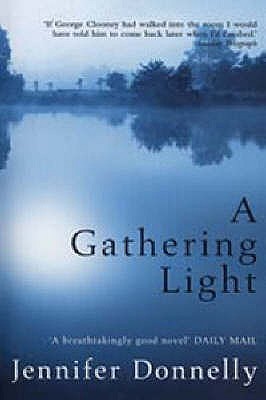
Past on Paper: 1910s YA REVIEW - 'A Gathering Light', Jennifer Donnelly (Bloomsbury, 2003)

Torn between a loyalty to her grief-stricken, struggling family, her first experience of romance and a burning desire to be a writer, a sad event forces Mattie to piece together a local mystery whilst making an important decision about her future.

I've been thinking a little too much about how I approach this feature - am I going to focus more on their historical context or just how good the story is? Unless I have easy access to a time machine, I'm not really in a position to judge their historical accuracy. Is this even important when reviewing book? Surely whether or not it's a gripping read should matter the most. You might have already gathered that I'm still a bit undecided about all of this. Maybe I should just get on and review the book...

Well, I'm a bit late to the party on this one. Ten years late to be accurate. Jo told me to read it ages ago, but I'd been putting it of for some reason. This is always the way when I'm faced with an 'acclaimed' book - am I just setting myself up for inevitable disappointed? If I don't enjoy it as much as I feel I'm supposed to, does this mean I'm not getting it I'm being a bit thick? Or maybe I was just putting this one off because it has a bit of a boring cover. Probably a mixture of all of the above. God, I really need to stop asking all these questions and just get on with it.

I was definitely mulling over this a little too much, because it turns out there was no reason to worry whatsoever...

A Gathering LightSo here we are in the 1910s, in the US, in a place and period I know nothing about. The fact that whether I did or not is completely irrelevant is testament to just how fantastic this book is. With a historical novel, I think it can maybe go in one of two directions - building a story around a famous incident and having that dramatically impact on the characters and plot, or having the story just 'sitting' on its setting, absorbing attitudes and conventions of the time, but never being completely dictated by them. This book definitely falls into the latter camp - when we were introduced to Mattie and her surroundings, I was initially a bit wary that this was going to be overshadowed by ISSUES - attitudes towards women and race, for example - but it manages to explore these (which it should) without the brilliant central story getting lost at all. This is about Mattie and how she comes to make an important decision whilst being pulled in many different directions - a familiar YA set up and skillfully told with the perfect balance of plot, place, and prose. I was initially more intrigued by the real-life murder mystery element, but that's not what this book is about at all, rather it's used as a device to push Matt's story along and very beautifully it does it too.


I remained on the ladder, looking at the figurine in my hand. You're wrong, Aunt Josie, I thought. It's not pride I'm feeling. It's another sin. Worse than all the other ones, which are immediate, violent, and hot. This one sits inside you quietly and eats you from the inside out like the trichina worms the pigs get. It's the Eight Deadly Sin. The one God left out. Hope.


The time shift method to a little while to get used to, but once all the pieces fall into place, this is an unusual, mind-blowing bit of story-telling. I highly recommend it whether you're after some cracking historical fiction or not.

Monday, 12 August 2013

Past on Paper - Interview With Lydia Syson, Author of 'A World Between Us'

Well, hello there.

It's been a while.

I won't go into a long and boring explanation as to why I haven't posted anything in an age, mainly because it's a bit long and boring. But the main reason there's been nothing here for the last month involved a four year old, a cup of milk and the keyboard of my old laptop (RIP old laptop). But I'm back! With a replacement laptop! And because I've been gone so long, I've got an extra special treat for you...

You may remember me introducing my new (well, it was new then) feature, Past on Paper. I'm going to be posting about YA books set in the twentieth century, for no particular reason other than I've recently loved quite a lot of this sort of historical fiction. You may also remember a review I did for A World Between Us, and that I liked it a lot. More than a lot. Not only was it a great story superbly written, but it centred around a period of history that I'm particularly interested in - the Spanish Civil War - as well as being the first overtly 'political' YA novel that I'd encountered, very much appealing to the politics nerd in me. So I thought I'd ask the author, Lydia Syson, for her thoughts on YA historical fiction, politics in YA novels and other things of great interest...


-          How would you define ‘historical’ fiction? Can it be anything up to contemporary or do you think a certain amount of time has to have passed?

I think it’s less a question of the passing of time than the passing of a particular world – which was why I felt able to include Nancy Mitford’s The Pursuit of Love in my Guardian Book Club historical top ten.  I’ve read other definitions that say 50 years must have passed (isn’t that also what turns old furniture into an antique?) or the writer can’t have been alive at the time of the setting.  I’m not terribly bothered by strict definitions.  In fact one of the reasons I particularly like writing YA fiction is its lack of concern for genre boundaries and strict definitions.  And I’m horribly aware from my own childhood experience that labels can be as a terrible turn-off.  Actually lots of my favourites were time slip books, or slightly alternative history.  Not that I would have known how to label them then.

The historical novels that I find most interesting are those actually propelled by specific events or a particular zeitgeist.  And place is as important to me as time. I get frustrated and annoyed by fiction that is merely vaguely historical and uses the past as decoration. 


-          What came first – a desire to write a YA book or a desire to write a book about the Spanish Civil War? What inspired you to marry the two together?

The first thing was having children, and sharing books with them.  Years ago my daughter suggested that I write a novel for children while I was waiting to hear from publishers about an historical biography I was hoping to write for adults.  I finally started it in the gap between delivery and publication of Doctor of Love.  This first novel was set in the eighteenth century, and I’m definitely planning to return to it one day.  The idea for writing ‘A World Between Us’ came from a later conversation with my daughter.  It seemed a perfect subject for a YA readership – world-changing events, commitment, passion, tragedy, romance, and betrayal, full of contemporary resonance.


-          Your story is centred around an event that isn’t widely known about – was this a conscious decision?

A World Between UsVery much so, though it was a somewhat risky one.  I was shocked to discover from my teenage daughter that most of her friends knew nothing at all about the Spanish Civil War.  I was also rather amazed to find nobody had already written the kind of book I had in mind – a novel full of the passions of the period that would arouse the interest of younger people, but offer a new perspective on the war too, something informed by the work of post-Cold War, post-Franco historians that used newly available archive resources and also addressed the question of women’s involvement in the war, and yet was completely accessible. Actually, put like that, I suppose it’s easier to understand why it hadn’t been done.  Another problem is that most children’s publishers seemed very bound to the curriculum when it comes to historical fiction, or wanted some sort of ‘history plus…’(fantasy/ghost etc) and of course I’d started writing at the height of the YA vampires and dystopia obsession. But once I’d become aware of the gap, I did feel a responsibility to fill it.  It was definitely a challenge.


-          As I teenager, I was aware that being interested in politics was a bit rare for someone of my age – what sort of feedback have you had from teenagers who have read A World Between Us in this respect?

I was a bit worried at first that young people today would find it hard to identify with that level of idealism and political commitment.  But I kept reminding myself of the fact that you’re never more open to new ideas and influences than when you are in your teens and early twenties.  Too many older people dismiss contemporary teenagers as self-obsessed social media addicts with no interest in the wider world.  I don’t think that’s true or fair.  School groups I’ve spoken to are very quick to see the parallels between the British Union of Fascists and far right groups in Britain today like the English Defence League and the British National Party.

This week I asked a large audience from a wide range of schools how they felt about the balance between romance and politics in A World Between Us. They were overwhelmingly more interested in the political aspects of the book, and said they’d like to see more politics in children’s fiction.  I was always determined not to shy away from the word communism, and was very pleased when one reader told me how much it had meant to her to find a communist character in a novel for the first time. I wanted to convey exactly why communism was so attractive to so many people all over the world in the 1930s, and why joining the Party seemed to them the only way to oppose fascism at the time.  But I think there are enough hints in the book to suggest the direction communism was taking.  


My impression is that the economic crisis and the ensuing debates about global capitalism are now reviving many teenagers’ interest in politics.  But it’s something that’s always going to fluctuate. I became a teenager in 1979, just after Thatcher was elected, and I think we were a very political generation. And of course it wasn’t rare at all for a teenager to be interested in the 1930s, when politics was on the street and in your face and much harder to avoid than it is today.


-          When writing a story around a significant historical event, how important is the balance between educating and entertaining a reader? Do you think the story has to be even more powerful in order to match the drama of the historical backdrop?

That’s a very good point.  Of course I want readers to come away having learned something – but I don’t want them ever to feel ‘educated’ or worse still, lectured.  And I certainly don’t want to tell them what to think about events.  It’s really important that the historical background is so much a part of the fabric of the novel that readers absorb information in passing, almost unconsciously.  Recognition of that fact might come later.  I suppose it’s a less a case of competing claims than making sure that the drama of the story comes naturally from the drama of the history – so that the past is never merely a backdrop.  I try to convey the atmosphere and dilemmas of a particular situation, and above all what it was like for the individuals caught up in it. 

My own starting point was that this had to be a book that anyone could read, however much or however little they already knew.  Of course I can’t help hoping that reading ‘A World Between Us’ might ignite an interest, even a passion for the subject, and make readers want to explore further – and there are lots of suggestions for that in the enhanced iBook edition and on my website – but it might be the only book on the Spanish Civil War that some people ever read. I think by the end of the book most people will have a pretty good sense of the sweep of events, what the war was all about and how it fits into twentieth century history.  It’s definitely education by stealth though – I don’t think it’s the job of historical fiction to lecture or hector.

-          How important a role do you think political themes play in YA fiction in general?

More than most publishers like to let on, perhaps.  I do think that it’s unusual for YA books on political subjects to address party politics in quite the way ‘A World Between Us’ does, but that’s partly to do with what makes a good story.  If you take a slightly broader perspective of what is ‘political’, there are ever increasing numbers of YA novels that come under that category – even The Hunger Games, arguably, if you think in terms of totalitarianism and individual freedom.  Amnesty International has a very interesting project about using fiction to teach human rights: http://www.amnesty.org.uk/content.asp?CategoryID=11988.
In DarknessI’ve recently been hugely impressed by Nick Lake’s remarkable novel In Darkness, set in Haiti.  It weaves together the story of Toussaint l’Ouverture, who led the slave revolt that briefly freed his country in the late 18th century, with that of Shorty, a boy in Port au Prince trapped under the rubble after the 2010 earthquake. I’m also looking forward to reading William Sutcliffe’s The Wall this summer.  Politics can be more or less overt in YA fiction, but you’ll definitely find them there when you start looking.  Think, for example, of Anna Perera’s Guantanamo Boy (more topical than ever), Mal Peet’s Life: an Exploded Diagram (the Cuban Missile crisis as a background to a rural coming-of-age story) or Jenny Downham’s You Against Me, which addresses sexual (and indeed class) politics quite brilliantly. Miriam Halahmy and Sarah Crossan offer different insights into immigration, racism, and asylum. Frank Cottrell Boyce’s book The Unforgotten Coat may have been aimed at younger readers, I think it’s as must-read for everyone!  Then of course there are environmental politics – Carl Hiaasen is very good on that, as is Gill Lewis, for slightly younger readers.  
What all these books have in common is that they open readers’ eyes and help them to think about the world in a different way. This seems to me the real value of YA literature, which doesn’t suffer from genre policing in quite the same way as adult fiction. It’s exciting and rewarding as a writer because – as long as you can persuade a publisher - you really can do what you like with it.
-          Would you ever consider writing about any other time periods, or even contemporary, in the future?

That Burning SummerDefinitely.  One of the things I loved about being a radio producer was flitting about – making a programme about Bohemia one month, the history of America on screen the next. I’d hate to get stuck in just one period.  I suppose I am more wary of contemporary settings, as they can date so much more quickly.  But I’m not ruling anything out.
That Burning Summer comes out in October.  This is set in England in the summer of 1940, right underneath the Battle of Britain, on a part of the coast so close to France that you could hear the guns across the channel.  In a sense it’s about events following on from those of A World Between Us – but everything has shifted again. The main characters are a Polish fighter pilot, who has already witnessed the invasions of his own country and France, a teenage girl who shelters him, and her younger brother who is obsessed with a set of rules that the government has issued: ‘If the Invader Comes’.  This book is moody and atmospheric, and much more confined in than A World Between Us in terms of characters, time and place, but it’s full of echoes and foreshadowing, evoking past, future and the wider world.  Not party politics, but not unpolitical. 
I’m not quite ready to talk about the book I hope to write next, but I have a feeling that A World Between Us fans will be very excited by it. And I’m certainly excited by the prospect of researching and writing it, and raring to go.

-          Are there any tips you would give to anyone thinking about writing historical YA fiction?

Total immersion. Live and breathe your period.  Dream it.  Bore your friends and family about it.  Use all your senses and everything at your disposal – especially sound archives and films, if it’s recent enough.  But if it isn’t, novels and plays written at the time you’re writing about will give you a great sense of voice and vocabulary.  Though having said that, it’s really important to get the balance right.  You want it to read convincingly to the modern ear without falling into pastiche.


Well, I'd like to say an enormous thanks to Lydia for yet more brilliant words. I, for one am ridiculously excited about That Burning Summer and the as-yet-undisclosed book that I can't wait to hear more about.

So what are your thoughts on politics in YA fiction? Does it play more of an important role than you first realised? Is young adult fiction a good place for political themes? (very much so I reckon)

Let me pick your brains people...