Showing posts with label writing tips. Show all posts

Tuesday, 26 November 2013

Interview: Bridget Tyler, Author of 'Drummer Girl'

You may remember my review of Drummer Girl from a weeks back - this addictive tale of a group of London school girls winging their way to LA to take part in a reality show is a great page turner with the snappiest of snappy dialogue. Today I welcome author and screenwriter Bridget Tyler to my blog to chat about pop culture, friendship and happy endings in YA...


What first drew you to writing for young adults and what were your favourite reads at this age? 

-         I love writing for Young Adults because I think great stories about growing up have more impact on us over the course of our lives as readers than any other kind of book. I still remember the books I loved when I was a teenager vividly – The Chronicles of Prydain by Lloyd Alexander, the Nancy Drew series, The Dark is Rising series by Susan Cooper, anything by Anne McCaffrey, Harry Potter… the list goes on. Those characters, and their journeys, helped me understand and survive my teenage years and I will never forget them. If I can tell just one story that makes someone else feel that way, then I will consider myself a success.


        Pop culture and current trends are a major part of Drummer Girl – what do you think are the pros and cons of writing about music in YA? 

-         Obviously, anything related to pop culture is dangerous in a book because it is bound to be out of date in a heartbeat. That’s why, as much as Drummer Girl takes place during a reality competition, I worked hard to avoid too many references to contemporary pop culture. You’ll notice as you read that most of the specific references made to bands are either to icons like Madonna and the Beatles, or to fake bands that only exist in the world of Drummer Girl. I even tried to stick to fairly classic styles when mentioning clothes, hair and make up while still being on trend. I used the framework of reality television and the music business, but I really wanted to be sure Drummer Girl was also about these five girls and their friendship not about the world they find themselves in.
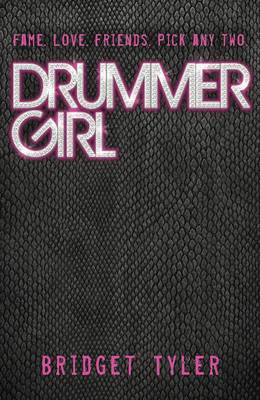


Drummer Girl        You’ve clearly got a knack for both authentic US and UK dialogue – how does writing dialogue for novels differ from screenwriting?

 -       Not much, actually. Whether I’m writing a book or a screenplay, I read the piece out loud to myself many, many times before it’s finished. It’s really the only way to tell if dialogue is going to ring true or not, at least for me. The biggest difference with the dialogue in a novel is that you don’t have to make the characters say as many things out loud. In a script, I might need a character to say, “Wait. Mum can’t possibly know we cut school last week. She spoke to Mrs. James this morning and neither of us is grounded. What are you up to?” because otherwise the audience has no way of knowing what’s happening in the character’s head.  In a novel, I might do this instead:

Molly stopped short, starring at her sister as she dug through her dresser drawers. No matter what Jane said, Mum couldn’t possibly know that they’d cut school. She’d spoken to Mrs. James this morning and everything. They’d be beyond grounded if either had a clue. So what was Jane up to?

See the difference? Finding organic and natural ways for characters to say what they’re thinking out loud is actually one of the most challenging aspects of screenwriting.


Friendship is a strong theme in Drummer Girl – do you think this is something we should be seeing more of in YA and what other themes do you think deserve more attention? 

-         Yes, I think friendship, particularly female friendship, is highly under utilized in YA and in storytelling in general. Friends are such an important part of the growing up experience – good friends make everything so much better and bad ones can be downright dangerous, in the wrong situation. Romance is fun, and there’s a lot of that in Drummer Girl too, but it isn’t the only kind of relationship out there to explore. As for other topics that could use more attention, this isn’t exactly a theme but I have to say I think it’s important for YA writers to create more characters who are into science, female characters in particular. Too often math and science gets ignored, or even vilified, in teen literature. Those fields are both truly fascinating and very important for the future – we should be telling stories that encourage people to be interested in them.


        Drummer Girl has an incredibly fast-paced plot – how do you ensure that this is balanced out with strong characters? 

-         Well this is another trick that comes from screenwriting – plotting that doesn’t develop the characters is going to end up being boring and character development that doesn’t advance the plot has a good chance of ending up on the cutting room floor. The goal is to make every new twist and turn of the plot service the characters so that you don’t need to slow down and take a detour in order to develop them. 


      And finally, how important do you think ‘happy endings’ are in YA?

-        I think every story deserves the ending that best fits it. Some stories end well, some don’t. There are happy endings in Drummer Girl and very, very sad ones. And a few that are in between. That’s the way life is. The one thing I do think all stories should have is hope. I think there is a place in the world for bleak stories that lack hope for the future, but they aren’t the kind of stories I chose to tell, nor are they the kind of stories I like to read. 


I'd like to thank Bridget for taking the time out to answer my questions and in particular, those very handing tips on writing dialogue. So thank you Bridget - I'm certainly looking forward to your future YA titles! And it's always nice to find a fellow Nancy Drew fan...

Wednesday, 29 February 2012

Writing Workshops That Work For Me

I came to this creative writing business/madness quite late in the day. I never really had the confidence to put pen to paper, fingertip to keyboard until I hit thirty and had a proper good old think about want I wanted to achieve with the rest of my days. I had that image of me as a bitter old granny spitting out regret about what I could have done if I'd had the gumption. I then I realised it didn't matter if I failed, I just didn't want to be the bitter old trout that never tried in the first place.

Anyway, I digress slightly. When I started exploring the old childhood writing dream, it occurred to me on more than one occasion that I would love to complete an MA in Creative Writing. It also occurred to me on just as many occasions that I neither had the money or the time to set aside to undertake such an enormous task. I was aware I needed help and guidance but not quite sure where else to look for it.

When searching online for creative writing courses, many struck me as being a bit on the pricey side. If I had the dosh, I would be more than happy to fork our the funds for a post-graduate qualification, but $600 for a six week online beginners course with minimal contact from anybody who had the slightest inkling about what they're harping on about? *muffled cough* RIP OFF!

So, more searching required then...

At the time I was living in sunny Brisbane, Australia. After wasting a lot of time on the internet, I stumbled across a magnificent organisation right on my doorstep (or a short bus ride away). The Queensland Writers Centre helps develop and connect writers across the state. It is also the publisher of The Australian Writers' Marketplace (similar to The Writers' and Artists' Yearbook), so is therefore rather fantastic and brilliant and vital. I attended a number of courses here - they were all excellent and informative, and very importantly, from my perspective, bloody good value for money (ie. much cheaper than rip-off central mentioned above). An example of the quality of advice on offer - I attended a young adult workshop run by YA queen, Melina Marchetta. There you go.

When moving back to the UK, I searched for a similar organisation in London and found Spread The Word.  They provide workshops, networking and mentoring for writers of all levels, schools and community groups. I attended my first workshop them last week, a day focusing on first novels, run by newly-published author, the excellent Katy Darby. It was a mine of useful information and thoroughly entertaining. And, rather amazingly, it only cost me £20. And even more amazingly, it offers subsidies to those on lower incomes or benefits.

It is so wonderful to find these places that aim to provide access to expert tuition to everybody. Maybe one day I'll undertake that MA. But it's reassuring to know that support and encouragement is there, even if I don't.

Does anyone else know of any similar groups or organisations? I know there are other fantastic Australian ones in different states, but I would be interested to find other UK-based ones. Let me know below...it might be interesting to start up a database of good-value for money writing courses out there...


Saturday, 24 September 2011

THE YEAR OF WRITING DANGEROUSLY

Ok, I originally intended this to be a review of this year's Brisbane Writers Festival, but, seeing as I only managed to make it to one workshop and one seminar, I feel that limited attendance does not a review make. (However, this is two more visits than I managed last year, so, yay for me).

So, I decided I would quite like to write down a bit about some stuff that I've learnt in the past year. Just an overview of advice from workshops I have attended since I make the foolish/brave decision to start putting pen to paper on a regular basis.

So, it goes with out saying that I really needed some guidance. This won't be a blow-by-blow account of each workshop, as I suspect that won't make particularly riveting reading, but I'll just share a few points that have helped me, both motivationally and in actually honing any skill that I may, or may not have.

Firstly, the best advice I've been given is to allow myself to write a really CRAP first draft. Maybe I'm a bit dense, but this never occured to me before. I remember writing a paragraph back in 2000 and whatever, shutting down the Word document and cringing at the thought of anyone reading such piffle. Now, I have nearly 65, 000 words worth of possible piffle but that really doesn't matter - I now know I could have the capacity to transform it into non-piffle at some stage in the future. The important thing is that it is THERE.

The second piece of advice has, unlike the above, always been an obvious one, for me, anyway. Write something that you WANT TO READ. The whole process has always been so instinctive for me, that I'm not even sure I would have the desire to emulate any particular trend without falling in love with it first. So, yeah, don't follow a trend. Unless you love it. Or you're some sort of super-manipulative machiavellian genius. In which case, I'm sure you'll be just fine.

Finally, I recently read an interview with a young television writer/actor whose advice to budding writers was to attend as many workshops as possible because you never know what gems you might pick up and where they could lead. My first thought was, yeah, well, if you're loaded, then no problem. Money, or lack of it, is a major consideration for me, as with many, I'm sure. I have no formal creative writing qualifications, and I'm not sure I ever will, so I feel like I have to pick the classes I do attend carefully. I was reluctant to go to a YA workshop at the Brisbane Writers Festival as I suspected it would be going over old ground, but I decided to give it a whirl. And a bloody good job I did, because in a 'first paragraph' exercise, I wrote an few short sentences that put a whole different take on an idea I'd been mulling around for ages. Yes, I did do exercises that I'd done previously, and yes, it did go over things that I already knew. But it was enjoyable and inspiring and got me thinking. So, maybe don't attend EVERY workshop going, but don't write it off without very good reason.

So, the title of this post. Well, I still consider writing a risk of sorts. A risk with my emotions and my confidence. But it gets easier the more I do it.

Oh, and write and read EVERYDAY. Everyone says that. And so they should. It's good advice.


Monday, 4 July 2011

Tips and Tricks From a Freelance Writing Seminar

Offering my own tips on successful freelance writing would effectively be like the incredibly short-sighted leading the blind. So instead, I will offer up a few little gems I picked up whilst in attendance of an excellent Freelance Writing Seminar run by the Queensland Writers Centre.

Thanks to Tiana Templeman, Phil Brown and Amanda Horswill for an very informative evening.


Know Your Market
Your story ideas should match your chosen publication - borrow copies from the library to get a feel for the tone and the house style of the publication.
Know WHEN to pitch an idea - avoid busy production times when replying to emails from freelancers maybe at the bottom of an editor's list of things to do.

Develop Contacts
Attend events and seminars, especially in your chosen field of interest or expertise.
Give out business cards and samples of your work at seminars - follow these up with an email a couple of weeks after the event.
Develop an online presence - a website or blog is essential showcase of your work when pitching ideas.
Join writers associations and relevant trade associations.
ALWAYS be professional.

Pitching Ideas
Make sure you know the correct person to contact.
Use a catchy story title in your subject line when emailing - use block capitals for an eye-catching effect.
Include a short, brief biography as an introduction, providing a link to your website or blog for further information.
Never send more than 5 fifty-word pitches at a time.
Always be succinct - don't waffle.
Remember, the first few words are VITAL.

Excellent advice, I think you'll agree. I for one will attempt to put these into practice over the next few months.