Kitty dreams of a beautiful life, but that's impossible in suburban London where her family is haunted by her father's unexpected death. So when her mum suggests moving to Amsterdam to try a new life, Kitty doesn't take much persuading. Will this be her opportunity to make her life picture perfect? In Amsterdam she meets moody, unpredictable Ethan, and clever, troubled Theo. Two enigmatic boys, who each harbour their own secrets. In a beautiful city and far from home, Kitty finds herself falling in love for the first time. But will love be everything she expected? And will anyone's heart survive? (Synopsis from Goodreads)
It's no secret that I love Keren David's books (see here and here) - I don't think there's any other author that nails the British teenage experience quite like she does. Although I've haven't reviewed it here, her previous book Salvage manages to balance realistic characters, engaging plot and heart-rending issues, something that I imagine is far trickier than it looks. I hate describing reads as 'issue' books, because it somehow feels like a disparaging comment rather than a compliment, with an automatic assumption that for a book to deal with tough or diverse issues, it has to sacrifice something in terms of plot or character. Ok, this has been true of some books but as This is Not a Love Story shows, just as Salvage did, it's more than possible to write about issues without sacrificing anything at all.
This where the similarities with Salvage end, however. Whereas that previous book put me through the emotional ringer by confronting some of the darker parts of society, This is Not a Love Story beams positivity and is one of the most refreshing books I've read in a long time. In fact, I can't think of anything it really falls into the same bracket as at all. Kitty's optimistic outlook on life is infectious and seeps through every page. I adored Kitty, but then I adored Theo and Ethan too - can't actually choose between them and wouldn't want to! This is the most realistic depiction of modern teens I've read in a long time - they're funny, emotional, they don't always have all the answers and they make mistakes, but then they move on. Their small expat community reminded me a lot of my gap year interactions many moons ago - you arrive in a new place, you fall in with a group and you get along with people no matter what your differences.
This is the first YA book I've read about Judaism and I loved the way it was presented as both a uniting force and common ground between Kitty and Theo, but also showed how religion isn't one dimensional - their upbringings had more differences than they did similarities and this connection wasn't the be all and end for them. Also, a shout out to the structure of the story - the added element of mystery ensured this a proper, bonefide page turner.
So whereas This is Not a Love Story isn't a love story (or is it?...), this review definitely is - a love story between woman and book (imagine a heart emoji right here - I don't how to do one on my desktop, sorry).
Showing posts with label UK YA. Show all posts
Wednesday, 10 June 2015
Friday, 3 January 2014
Guest Post: Jeff Norton, Author of the MetaWars Series
Characters occupy a strange part of a
writer’s brain, an uncharted netherworld somewhere between dream and reality. To me, these people are real. I see them. I
hear them. But to everyone else, they are fictional constructs that exist only
on the page.
My greatest hope is that Jonah and Sam
become as real to the reader as they are to me. They’ve already made the great
leap from my brain to the page. And now
they exist on their own, for readers to meet and inspect and analyze. I’ve done what I can. It’s up to them to make
the final jump from page to heart, to take up residence in some small corner of
the reader’s life.
If you’ve read the MetaWars novels, you’ll
know that immortality is a central theme of the books. In the world I’ve created, people yearn to
live forever in a digital way – “Uploading” their consciousness to the internet
in order to outlive their mortal bodies – digital immortality. And I suppose that’s what I hope to achieve
for my characters.
Long after I’m gone, like authors of long
gone generations, I hope that future readers will discover Jonah’s quest, his
troublesome coming of age in a confusing world, and his friendship with Sam,
and the two main characters will live anew in the mind of those unknowable, future
readers. Likely, they’ll read the books
in some digital form that we haven’t yet dreamed up, and not on paper, and in
that way, reality will mirror fiction: Jonah and Sam will achieve their digital
immortality. They will outlive me,
outlive their current physical (paperback) form, and jump from generation to
generation along a digital spectrum. And
if they do that, they can truly live forever and my “goodbye” will not final.
Thank you so much Jeff for sharing this rather moving take on well-loved characters. And I'll be reviewing some more of the MetaWars book in the very near future...
Jeff Norton is the author of the MetaWars
saga from Orchard Books. The final
installment, MetaWars 4.0: The Freedom Frontier publishes 2nd
January, 2014. Find Jeff on the web at www.jeffnorton.com, twitter at www.twitter.com/thejeffnorton
and facebook at www.facebook.com/thejeffnorton.
Friday, 13 December 2013
Past on Paper - 1940s Review - 'That Burning Summer', Lydia Syson (Hot Key Books, 2013)
Romney Marsh, July 1940. When invasion threatens, you have to grow up quickly. Sixteen-year-old Peggy has been putting on a brave face since the fall of France, but now the enemy is overhead, and the rules are changing all the time. Staying on the right side of the law proves harder than she expects when a plane crash-lands in the Marsh: it's Peggy who finds its pathetic, broken pilot; a young Polish man, Henryk, who stays hidden in a remote church, secretly cared for by Peggy. As something more blossoms between the two, Peggy's brother Ernest's curiosity peaks and other secrets come to light, forcing Peggy and Henryk to question all the loyalties and beliefs they thought they held dear. (Synopsis from Goodreads)Quick warning: the odd spoiler on the horizon folks...
With that amazing title and a synopsis that strongly hints of a secret wartime love affair, you'd be forgiven for thinking that this book is an out-and-out romance. Ok, it is a bit of an out-and-out romance, but as much as I adored this particular relationship and the mammoth objects put in its path, the thing I took away was a different sort of fire - having the strength to cope with the day-to-day realities during some of the most difficult and tense events in history.As with her previous book, Syson's writing takes a particular point and place in the past and opens it up in a way I don't think I've come across in YA before. All the research and attention to detail is evident, yet it never feels like you're sitting through a history lesson. Or maybe just like you're experiencing the best history lesson ever. This book not only sheds light on the contribution of Polish pilots to the war effort, but also the story of those who chose to stand by their pacifist principles in the face of overwhelming pressure and the ripple effects this had on their families. I was initially a bit apprehensive about the large part Peggy's younger brother Ernest appeared to be playing in the story ( just wanted to get to the kissing bits to be honest), but his journey and how this tallied with Henryk's experiences, ended up being my favourite part of the book. This is a tale about a different sort of war time bravery - of coping with overwhelming mental as well as physical hurdles as well as standing up for beliefs in the face of public opinion and convention. But with all the complex issues floating about, there is still a strong and powerful chemistry between Peggy and Henryk that was a joy to read. Some of the scenes actually made my page CRACKLE, I swear.
As with all the best historical fiction, this provides a new perspective on a period that has been depicted on paper many, many times before. It's a very welcome addition to the growing number of YA books set during this period that I've had the pleasure to read in the last couple of years. Not only does it make you think AND swoon, but there's also does a rather good sideline in suspense too. Oh, and the cover's ace as well. Seriously, what more could you want?
If it turns out you DO want more, then have a read of my interview with Lydia Syson in which she discusses writing historical young adult fiction and the presence of politics in YA. You're welcome.
Tuesday, 8 October 2013
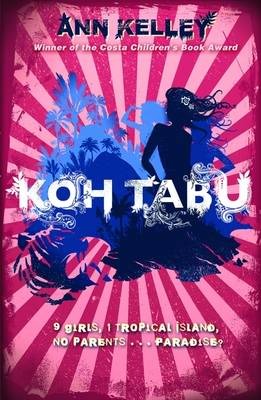
Past on Paper: 1970s YA REVIEW - 'Koh Tabu', Ann Kelley (Oxford University Press, 2010)
Fourteen-year-old Bonnie MacDonald couldn't be more excited for a camping trip on an island off the coast of Thailand with her fellow Amelia Earhart Cadets-the daughters of the men and women stationed there during the Vietnam War. But when a strong current deposits the girls on what their boatman calls the "forbidden island," things take a turn for the worse. What once seemed like a vacation in paradise has become a battle against the elements (Synopsis from Goodreads)Gosh, this is a tricky one to review. But I shall try. You know that problem I was pondering in my last Past on Paper review? The one about whether to judge these books on how well they use their historical context? (I may have put it in a slightly more rambling, less coherent way). Well, this could perhaps be used as an example of not using your historical context to the best effect. Gah, I so wanted to love this one, because it sounded fantastic - a group of girls marooned on a far-flung Thai island in 1974. Doesn't it sound fantastic?
Back to that old historical context thing. One of the many things that interested me about this was the time period, but if I hadn't known it was set in the 1970s, I'm not sure I would have been able to pin it down. Ok, so yes, it was set on a baron desert island, and they're not famous for their availability of cultural references, but there was very little in the voices or actions of some of the characters that felt like it they might stem from this time period specifically - more of just a general nod to the past. And I would have loved some more references to the historical events of the time too - how the war was impacting on them in particular - there were a few hints of family dramas, but this was very much a story about their current, more immediate crisis.I think that might have been the problem, in that I was expecting so much and it just felt liked it lagged in a few areas. The story of adolescents stranded on a desert island isn't necessarily a new one, but the mention of it still promises so much drama and tension. Unfortunately, I didn't really get too much of this here. There are incredibly dramatic and sometimes tragic incidents, but I just wanted more emotion and build up. They seemed to just...happen. I've read a few books recently that have used a diary format to tell a story and I'm starting to think that this might be my problem - a lot of the immediacy of the events has been sacrificed to keep this method authentic and I don't think it really works for me as a reader.
That said, there are still some very surprising, unusual and memorable developments, including one rather beautiful, evocative encounter with a stranger, and Bonnie is an engaging guide who is fully aware of her own shortcomings as well as those of her companions.
In some ways, this is a brilliant, original idea for a YA and the sheer nature of the girls' predicament kept me turning the pages until the end. But this didn't really work for me as a historical novel, or a particularly thrilling one.
Wednesday, 25 September 2013
YA REVIEW - 'Pantomime', Laura Lam (Strange Chemistry, 2013)
R. H. Ragona’s Circus of Magic is the greatest circus of Ellada. Nestled among the glowing blue Penglass—remnants of a mysterious civilisation long gone—are wonders beyond the wildest imagination. It’s a place where anything seems possible, where if you close your eyes you can believe that the magic and knowledge of the vanished Chimaera is still there. It’s a place where anyone can hide. Iphigenia Laurus, or Gene, the daughter of a noble family, is uncomfortable in corsets and crinoline, and prefers climbing trees to debutante balls. Micah Grey, a runaway living on the streets, joins the circus as an aerialist’s apprentice and soon becomes the circus’s rising star. But Gene and Micah have balancing acts of their own to perform, and a secret in their blood that could unlock the mysteries of Ellada. (Synopsis from Goodreads)
Oh my, oh my. I remember reading a lot of glowing reviews about this one when it was first released so I feel rather stupid for only getting around to picking it up now. I've recently been in one of those mini-reading slumps. My current book was dragging me down. You know when you're ploughing your way through but really not enjoying it and every time you pretend you haven't seen it lying around, waiting to be finished, the guilt eats away at you as you reach over for the remote control and watch some mind numbing sitcom repeat that you could recite in your sleep because you've seen it so many times before?
Yeah that. This state of affairs scares me. It makes me think that I'm going off books. It makes reading feel like a chore. It is a bad business.
Which is why I chose to jump ship and start something completely different. And this one could definitely be filed under different. Or unique. Or unlike anything I've read before.You get the idea.
It's pretty special.
I'm the first to admit that I struggle with fantasy sometimes. I think it's a time thing - with books that paint a particularly strong picture, I need to be completely absorbed fairly early on so they give me absolutely no choice - I HAVE to ignore everything else - until I've turned the last page. Otherwise it's just not happening. I have distractions (kids etc), that will pull me off the sofa and then my relationship with that book will never be the same again and we'll probably revert to the state of affairs detailed above.
Hello book slump.
But you might have already guessed that this didn't happen with Pantomime. As well as reading those great reviews a few months back, I was also reminded about this title when I went to a seminar on LGBT characters and themes in YA. I'm afraid on this particular subject, that's all I'm going to say in relation to this book for fear of the spoiler demon striking me down with a bolt of lightening, but I can tell you that it not only manages to portray this issue in a non 'issuey' way but also does something completely unique with it.
I can't really say much else about the story - the synopsis above does a much better job of it than my garbled attempt would - but as with any book that I adore, it's the writing and the characters that are pretty much perfect here. The stories and journeys of Micah and Gene are moving, intriguing, passionate, teaming with sexual tension and heartbreaking in the best and worst possible ways. The world of the circus and Ellada is rich with gorgeous imagery, detail and intriguing supporting characters and it's one I can't wait to get back to when the sequel comes out next year.
So put aside your life for a bit and get taken over.
Yeah that. This state of affairs scares me. It makes me think that I'm going off books. It makes reading feel like a chore. It is a bad business.
Which is why I chose to jump ship and start something completely different. And this one could definitely be filed under different. Or unique. Or unlike anything I've read before.You get the idea.
It's pretty special.
I'm the first to admit that I struggle with fantasy sometimes. I think it's a time thing - with books that paint a particularly strong picture, I need to be completely absorbed fairly early on so they give me absolutely no choice - I HAVE to ignore everything else - until I've turned the last page. Otherwise it's just not happening. I have distractions (kids etc), that will pull me off the sofa and then my relationship with that book will never be the same again and we'll probably revert to the state of affairs detailed above.
Hello book slump.
But you might have already guessed that this didn't happen with Pantomime. As well as reading those great reviews a few months back, I was also reminded about this title when I went to a seminar on LGBT characters and themes in YA. I'm afraid on this particular subject, that's all I'm going to say in relation to this book for fear of the spoiler demon striking me down with a bolt of lightening, but I can tell you that it not only manages to portray this issue in a non 'issuey' way but also does something completely unique with it.
I can't really say much else about the story - the synopsis above does a much better job of it than my garbled attempt would - but as with any book that I adore, it's the writing and the characters that are pretty much perfect here. The stories and journeys of Micah and Gene are moving, intriguing, passionate, teaming with sexual tension and heartbreaking in the best and worst possible ways. The world of the circus and Ellada is rich with gorgeous imagery, detail and intriguing supporting characters and it's one I can't wait to get back to when the sequel comes out next year.
So put aside your life for a bit and get taken over.
Labels:
2013,
fantasy,
favourite reads,
LGBT,
reviews,
UK YA,
US YA,
young adult fiction
Monday, 23 September 2013
YA REVIEW ROUND UP
This is the first mini review-type round up that I've done. I've avoided them up until now because I'd rather just write a full review to do a book justice. However, over the summer, my reading habits became so erratic and disorganised that I'm left with no choice - if I don't write down something about these books now, then there will be no words written down about them at all, and that would be a shame. I don't post about every book I read, but I I do try to review the ones that I think I have an opinion on, good or bad, and these definitely come under that category. You might start seeing a few more of these posts from me in the future...
We Can Be Heroes - Catherine Bruton (Egmont UK, 2011)
I had a lot to say about this one, but it's been a while since I finished it and as time goes by, it becomes a bit more difficult to articulate all those feelings in blog form. But in short, I loved it. It's so refreshing when a book manages to explore 'issues' without making it obvious that it's exploring the 'issues' - when the story and the characters take precedence over the 'issues' but never belittling their importance in the process. This deals with the after-effects of 9/11 in a bittersweet way - an interesting take on grief and present-day attitudes to race and religion with a authentic and utterly convincing voice. My only criticism is that it was a bit too long, but other than that, highly recommended for slightly younger readers.
The 5th Estate - Rick Yancey (Penguin, 2013)
This is the problem with reading books that get a lot of great reviews - am I just setting myself up for disappointment? It's not that I didn't enjoy this one - it was an engrossing read, but I was expecting so much more. I don't read a lot of sci-fi, so in some ways, I don't think I'm the right person to judge, but some of the dialogue here was woeful. Think Starship Troopers, but with extra cheese. I liked the main character, Cassie and her story. That was, until a romantic element was introduced and just undermined the whole thing. He smelt of woodsmoke and chocolate. That says it all really. But my main problem was with the whole premise - as far as I could see, there was a far easier way to solve the whole 5th Wave thing than with the actual 5th Wave. I might continue with this series, I might not.
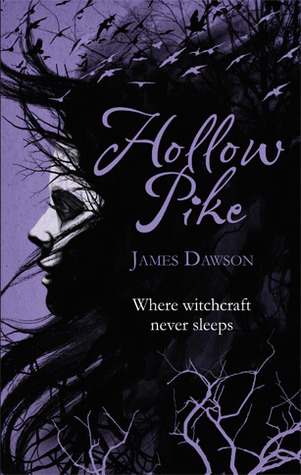
Hollow Pike - James Dawson (Indigo, 2012)
Really enjoyed this one. In theory, I love mysteries. I grew up reading them. But for some reason, I've always been a bit weary about YA mysteries or ghost stories. Perhaps because there's nothing worse than a disappointing ending. But this one was more than satisfactory. Much more, in fact. Great characters, although I would have loved a bit more of Kitty, Delilah and Jack and I didn't have a clue what was going to happen next. Had a real Scream feel to proceedings, which in no bad thing in my opinion.
We Can Be Heroes - Catherine Bruton (Egmont UK, 2011)
The 5th Estate - Rick Yancey (Penguin, 2013)
Hollow Pike - James Dawson (Indigo, 2012)
Monday, 12 August 2013
Past on Paper - Interview With Lydia Syson, Author of 'A World Between Us'
Well, hello there.It's been a while.
I won't go into a long and boring explanation as to why I haven't posted anything in an age, mainly because it's a bit long and boring. But the main reason there's been nothing here for the last month involved a four year old, a cup of milk and the keyboard of my old laptop (RIP old laptop). But I'm back! With a replacement laptop! And because I've been gone so long, I've got an extra special treat for you...
You may remember me introducing my new (well, it was new then) feature, Past on Paper. I'm going to be posting about YA books set in the twentieth century, for no particular reason other than I've recently loved quite a lot of this sort of historical fiction. You may also remember a review I did for A World Between Us, and that I liked it a lot. More than a lot. Not only was it a great story superbly written, but it centred around a period of history that I'm particularly interested in - the Spanish Civil War - as well as being the first overtly 'political' YA novel that I'd encountered, very much appealing to the politics nerd in me. So I thought I'd ask the author, Lydia Syson, for her thoughts on YA historical fiction, politics in YA novels and other things of great interest...
-
How
would you define ‘historical’ fiction? Can it be anything up to contemporary or
do you think a certain amount of time has to have passed?
The historical novels
that I find most interesting are those actually propelled by specific events or
a particular zeitgeist. And place is as
important to me as time. I get frustrated and annoyed by fiction that is merely
vaguely historical and uses the past as decoration.
-
What
came first – a desire to write a YA book or a desire to write a book about the
Spanish Civil War? What inspired you to marry the two together?
The
first thing was having children, and sharing books with them. Years ago my daughter suggested that I write
a novel for children while I was waiting to hear from publishers about an
historical biography I was hoping to write for adults. I finally started it in the gap between delivery
and publication of Doctor of Love. This first novel was set in the eighteenth
century, and I’m definitely planning to return to it one day. The idea for writing ‘A World Between Us’ came
from a later conversation with my daughter.
It seemed a perfect subject for a YA readership – world-changing events,
commitment, passion, tragedy, romance, and betrayal, full of contemporary
resonance.
-
Your
story is centred around an event that isn’t widely known about – was this a
conscious decision?
-
As
I teenager, I was aware that being interested in politics was a bit rare for
someone of my age – what sort of feedback have you had from teenagers who have
read A World Between Us in this
respect?
I was a bit worried at first that young people today would find it
hard to identify with that level of idealism and political commitment. But I kept reminding myself of the fact that
you’re never more open to new ideas and influences than when you are in your
teens and early twenties. Too many older
people dismiss contemporary teenagers as self-obsessed social media addicts
with no interest in the wider world. I
don’t think that’s true or fair. School
groups I’ve spoken to are very quick to see the parallels between the British
Union of Fascists and far right groups in Britain today like the English
Defence League and the British National Party.
This week I asked a large
audience from a wide range of schools how they felt about the balance between
romance and politics in A World Between
Us. They were overwhelmingly more interested in the political aspects of
the book, and said they’d like to see more politics in children’s fiction. I was always determined not to shy away from
the word communism, and was very pleased when one reader told me how much it
had meant to her to find a communist character in a novel for the first time. I
wanted to convey exactly why communism was so attractive to so many people all
over the world in the 1930s, and why joining the Party seemed to them the only
way to oppose fascism at the time. But I
think there are enough hints in the book to suggest the direction communism was
taking.
-
When
writing a story around a significant historical event, how important is the
balance between educating and entertaining a reader? Do you think the story has
to be even more powerful in order to match the drama of the historical
backdrop?
That’s
a very good point. Of course I want
readers to come away having learned something – but I don’t want them ever to
feel ‘educated’ or worse still, lectured.
And I certainly don’t want to tell them what to think about events. It’s really important that the historical
background is so much a part of the fabric of the novel that readers absorb
information in passing, almost unconsciously.
Recognition of that fact might come later. I suppose it’s a less a case of competing
claims than making sure that the drama of the story comes naturally from the
drama of the history – so that the past is never merely a backdrop. I try to convey the atmosphere and dilemmas of
a particular situation, and above all what it was like for the individuals
caught up in it.
My own starting point
was that this had to be a book that anyone could read, however much or however
little they already knew. Of course I
can’t help hoping that reading ‘A World Between Us’ might ignite an interest,
even a passion for the subject, and make readers want to explore further – and
there are lots of suggestions for that in the enhanced iBook edition and on my
website – but it might be the only book on the Spanish Civil War that some
people ever read. I think by the end of the book most people will have a pretty
good sense of the sweep of events, what the war was all about and how it fits
into twentieth century history. It’s definitely
education by stealth though – I don’t think it’s the job of historical fiction
to lecture or hector.
-
How
important a role do you think political themes play in YA fiction in general?
More than most publishers
like to let on, perhaps. I do think that
it’s unusual for YA books on political subjects to address party politics in
quite the way ‘A World Between Us’ does, but that’s partly to do with what
makes a good story. If you take a
slightly broader perspective of what is ‘political’, there are ever increasing
numbers of YA novels that come under that category – even The Hunger Games, arguably, if you think in terms of
totalitarianism and individual freedom.
Amnesty International has a very interesting project about using fiction
to teach human rights: http://www.amnesty.org.uk/content.asp?CategoryID=11988.
What all these books have
in common is that they open readers’ eyes and help them to think about the
world in a different way. This seems to me the real value of YA literature,
which doesn’t suffer from genre policing in quite the same way as adult
fiction. It’s exciting and rewarding as a writer because – as long as you can
persuade a publisher - you really can do what you like with it.
-
Would
you ever consider writing about any other time periods, or even contemporary,
in the future?
That Burning Summer comes
out in October. This is set in England
in the summer of 1940, right underneath the Battle of Britain, on a part of the
coast so close to France that you could hear the guns across the channel. In a sense it’s about events following on
from those of A World Between Us –
but everything has shifted again. The main characters are a Polish fighter
pilot, who has already witnessed the invasions of his own country and France, a
teenage girl who shelters him, and her younger brother who is obsessed with a
set of rules that the government has issued: ‘If the Invader Comes’. This book is moody and atmospheric, and much
more confined in than A World Between Us in
terms of characters, time and place, but it’s full of echoes and foreshadowing,
evoking past, future and the wider world.
Not party politics, but not unpolitical.
I’m not quite ready
to talk about the book I hope to write next, but I have a feeling that A World Between Us fans will be very
excited by it. And I’m certainly excited by the prospect of researching and
writing it, and raring to go.
-
Are
there any tips you would give to anyone thinking about writing historical YA
fiction?
Total
immersion. Live and breathe your period.
Dream it. Bore your friends and
family about it. Use all your senses and
everything at your disposal – especially sound archives and films, if it’s
recent enough. But if it isn’t, novels
and plays written at the time you’re writing about will give you a great sense
of voice and vocabulary. Though having
said that, it’s really important to get the balance right. You want it to read convincingly to the
modern ear without falling into pastiche.
Well, I'd like to say an enormous thanks to Lydia for yet more brilliant words. I, for one am ridiculously excited about That Burning Summer and the as-yet-undisclosed book that I can't wait to hear more about.
So what are your thoughts on politics in YA fiction? Does it play more of an important role than you first realised? Is young adult fiction a good place for political themes? (very much so I reckon)
Let me pick your brains people...
Sunday, 5 May 2013
YA REVIEW: 'In Darkness' - Nick Lake (Bloomsbury, 2012)
In the aftermath of the Haitian earthquake a boy is trapped beneath the rubble of a ruined hospital: thirsty, terrified and alone. 'Shorty' is a child of the slums, a teenage boy who has seen enough violence to last a lifetime, and who has been inexorably drawn into the world of the gangsters who rule Site Soleil: men who dole out money with one hand and death with the other. But Shorty has a secret: a flame of revenge that blazes inside him and a burning wish to find the twin sister he lost five years ago. And he is marked. Marked in a way that links him with Toussaint L'Ouverture, the Haitian rebel who two-hundred years ago led the slave revolt and faced down Napoleon to force the French out of Haiti. As he grows weaker, Shorty relives the journey that took him to the hospital, a bullet wound in his arm. In his visions and memories he hopes to find the strength to survive, and perhaps then Toussaint can find a way to be free ... (Synopsis from Goodreads)
Sometimes it's the books that are the most difficult to catagorise or pigeon-hole that are the ones worth seeking out. I wouldn't describe this as either contemporary YA or historical YA, yet it contains elements of both and manages to fuse them to make something quite unique. It annoys me when people sometimes describe UKYA as 'gritty', maybe because what is perhaps intended to come across as edginess only ends up sounding forced and might as well have LET'S TALK ABOUT ALL THE ISSUES plastered across the cover. But not only could this be described as 'gritty' (I wouldn't use that word personally), but reading it almost felt like I was picking bits of the grit from open wounds. This is a good thing, by the way.
I'm struggling to think of a YA book I've read that's come close to this in terms of unflinching power. Emotion, yes, but it's the combination of subject matter and the unapologetic way it conveys it that's pretty damn amazing. Put it this way, anyone who thinks of young adult fiction as 'fluffy' needs to read this - it's about as fluffy as heavy-duty sandpaper. And the prose is just so skilled - switching between the two completely different voices of Shorty and Toussaint and remaining utterly convincing with both, for example. Sometimes, when I'm reading a book, I think along the lines 'oh, that's fantastic writing, I can see what they did there' which is great, but the whole point of fantastic writing is, in my opinion, for it to completely submerge me in a book so I shouldn't even notice these things. And, for the most part, this book did just that...eventually...
Which brings me to the downside of picking up such a powerful read, and I think this probably is more a criticism of my reading habits than the book itself. I've talked about this in previous posts - my concentration when it comes to reading isn't quite what it was and it's very rare that I actually get the opportunity to sit down and lose myself in a story. I think this book requires that of the reader to fully appreciate it. I kept having to dip in and out and as a consequence, the impact was a bit lost. It was only when I was getting to the last third that it really took its hold.
Like I said before, I think he really nailed the two voices of Shorty and Toussaint perfectly, but for me, sometimes the switching back and forth slowed down the action, especially in Shorty's tale. As much as I loved the story behind Haiti's independence, it was Shorty's struggle in the aftermath of the earthquake and the recounting of the loss of his innocence that had the real emotional pull for me.
So if you're thinking about reading this one, set aside a few hours without interruption and let these words consume from the inside out. That's much more appealing than it sounds.
Oh, and tissues. Don't forget tissues. You will need them. Plenty of tears and snot. Nice.
I'm struggling to think of a YA book I've read that's come close to this in terms of unflinching power. Emotion, yes, but it's the combination of subject matter and the unapologetic way it conveys it that's pretty damn amazing. Put it this way, anyone who thinks of young adult fiction as 'fluffy' needs to read this - it's about as fluffy as heavy-duty sandpaper. And the prose is just so skilled - switching between the two completely different voices of Shorty and Toussaint and remaining utterly convincing with both, for example. Sometimes, when I'm reading a book, I think along the lines 'oh, that's fantastic writing, I can see what they did there' which is great, but the whole point of fantastic writing is, in my opinion, for it to completely submerge me in a book so I shouldn't even notice these things. And, for the most part, this book did just that...eventually...
Which brings me to the downside of picking up such a powerful read, and I think this probably is more a criticism of my reading habits than the book itself. I've talked about this in previous posts - my concentration when it comes to reading isn't quite what it was and it's very rare that I actually get the opportunity to sit down and lose myself in a story. I think this book requires that of the reader to fully appreciate it. I kept having to dip in and out and as a consequence, the impact was a bit lost. It was only when I was getting to the last third that it really took its hold.
Like I said before, I think he really nailed the two voices of Shorty and Toussaint perfectly, but for me, sometimes the switching back and forth slowed down the action, especially in Shorty's tale. As much as I loved the story behind Haiti's independence, it was Shorty's struggle in the aftermath of the earthquake and the recounting of the loss of his innocence that had the real emotional pull for me.
So if you're thinking about reading this one, set aside a few hours without interruption and let these words consume from the inside out. That's much more appealing than it sounds.
Oh, and tissues. Don't forget tissues. You will need them. Plenty of tears and snot. Nice.
Thursday, 28 March 2013
YA REVIEW - 'Adorkable', Sarra Manning (Atom, 2012)
Jeane Smith's a blogger, a dreamer, a jumble sale queen, CEO of her own lifestyle brand, and has half a million followers on Twitter. Michael Lee's a star of school, stage, and playing field. A golden boy in a Jack Wills hoodie. They have nothing in common but a pair of cheating exes. So why can't they stop making out? (Synopsis from Goodreads)
When I read a book on my Kindle, I tend to highlight bits that I love as well a bits that I don't love quite so much, like a lot of other readers do, I should imagine. Of course, most of the time I don't refer to them ever again because I one of those new-old Kindles - the ones with no keypad, but no touchscreen either, so the idea of trying to make notes about said highlights is not an inviting one, not unless I want to get cramp in my thumb from repeatedly hitting the arrow button. And without notes, I have to remember exactly why I highlighted them in the place. It's a long and not particularly interesting brain undertaking and one that I won't bore you with for much longer.
In short, I highlight stuff if I have strong feeling about the stuff.

But this didn't happen with Adorkable. But not because I didn't have strong feelings about it and its stuff. Because it just wouldn't let me stop to highlight the stuff. It had me within its grasp for an entire Sunday. And this NEVER happens to me any more. I normally read in fifteen minute bursts in the morning or evening and have come to accept that this is my reading lot from now on. It might have helped a bit that this particular Sunday was Mother's Day, so I'd decided I wasn't going to do anything at all apart from pick up my phone to order takeaway. On that day, my Kindle remained firmly wedged between my palms, no highlighting, no stopping to think about how much I loved/loathed a certain quote, just pure, relentless, reading pleasure.
I think this book should be used as an example of how to write a great love interest. I've enjoyed Sarra Manning's books in the past but never before have I completely fallen for one of her leading men quite like this mahoosive boy crush. He's not the sort of guy I would have touched with a barge pole when I was a young pup but I suppose that's the point - not a complete arsehole but not 'perfect' by any means either. Which, of course means he is PERFECT. Michael Lee, I adore you. The best thing about reading YA as an adult is when you come across something or someone that makes you desperate to relive it all again SO BADLY. And it wasn't even all that great the first time around.
And Jeane - I should have hated her. I should have thought she was a precocious and arrogant. I mean, I'm not supposed to get on board with a person considerably younger than me who earns a heck of a lot more money. But everything about her just worked. When you've got a character that manages to balance her extremes with a convincing vulnerability then you've won me over. I loved that her looks weren't 'perfect' but that she really didn't give two hoots about it. And I loved the sexy times - two confident teenagers with a bit of experience who didn't think they knew it all and still considered sex to be a big deal. Which is completely is.
I was a bit worried at one point that Jeane's rather unique situation was going to be glamorized - what seventeen year old wouldn't want to live home alone, have a massive internet following and be invited to conferences in New York? But we are also reminded that Jeane was still a teenager and that this lifestyle is bound to have consequences...And I did worry about the state of her teeth somewhat. All that Haribo consumption has to have consequences too.
A big thank you to Jo and Maggie for their utterly persuasive reviews of this book.
Now just trying to control the urge to type MICHAEL LEE MICHAEL LEE MICHAEL LEE MICHAEL LEE repeatedly.
And failing miserably.
When I read a book on my Kindle, I tend to highlight bits that I love as well a bits that I don't love quite so much, like a lot of other readers do, I should imagine. Of course, most of the time I don't refer to them ever again because I one of those new-old Kindles - the ones with no keypad, but no touchscreen either, so the idea of trying to make notes about said highlights is not an inviting one, not unless I want to get cramp in my thumb from repeatedly hitting the arrow button. And without notes, I have to remember exactly why I highlighted them in the place. It's a long and not particularly interesting brain undertaking and one that I won't bore you with for much longer.
In short, I highlight stuff if I have strong feeling about the stuff.
But this didn't happen with Adorkable. But not because I didn't have strong feelings about it and its stuff. Because it just wouldn't let me stop to highlight the stuff. It had me within its grasp for an entire Sunday. And this NEVER happens to me any more. I normally read in fifteen minute bursts in the morning or evening and have come to accept that this is my reading lot from now on. It might have helped a bit that this particular Sunday was Mother's Day, so I'd decided I wasn't going to do anything at all apart from pick up my phone to order takeaway. On that day, my Kindle remained firmly wedged between my palms, no highlighting, no stopping to think about how much I loved/loathed a certain quote, just pure, relentless, reading pleasure.
I think this book should be used as an example of how to write a great love interest. I've enjoyed Sarra Manning's books in the past but never before have I completely fallen for one of her leading men quite like this mahoosive boy crush. He's not the sort of guy I would have touched with a barge pole when I was a young pup but I suppose that's the point - not a complete arsehole but not 'perfect' by any means either. Which, of course means he is PERFECT. Michael Lee, I adore you. The best thing about reading YA as an adult is when you come across something or someone that makes you desperate to relive it all again SO BADLY. And it wasn't even all that great the first time around.
And Jeane - I should have hated her. I should have thought she was a precocious and arrogant. I mean, I'm not supposed to get on board with a person considerably younger than me who earns a heck of a lot more money. But everything about her just worked. When you've got a character that manages to balance her extremes with a convincing vulnerability then you've won me over. I loved that her looks weren't 'perfect' but that she really didn't give two hoots about it. And I loved the sexy times - two confident teenagers with a bit of experience who didn't think they knew it all and still considered sex to be a big deal. Which is completely is.
I was a bit worried at one point that Jeane's rather unique situation was going to be glamorized - what seventeen year old wouldn't want to live home alone, have a massive internet following and be invited to conferences in New York? But we are also reminded that Jeane was still a teenager and that this lifestyle is bound to have consequences...And I did worry about the state of her teeth somewhat. All that Haribo consumption has to have consequences too.
A big thank you to Jo and Maggie for their utterly persuasive reviews of this book.
Now just trying to control the urge to type MICHAEL LEE MICHAEL LEE MICHAEL LEE MICHAEL LEE repeatedly.
And failing miserably.
Saturday, 16 March 2013
YA REVIEW - 'Metawars: Fight For the Future', Jeff Norton (Orchard, 2012)
In an unforgiving future, two warring factions - the MILLENIALS and the GUARDIANS - are locked in a brutal battle over control of an online virtual world called the Metasphere. Jonah Delacroix has always known which side he's on - the same side as his dead father. But when he assumed his father's avatar, he learns that things aren't as black and white as he once believed. He's catapulted into a full-throttle race through both worlds - but can he find the truth? (Synopsis from Goodreads)
I've always been slightly wary of any book/film that relies of some form of technology as a facet of the plot. Not because I think they won't be any good, far from it, but because of that old time chestnut - if I'm reading something that contains a lot of techy stuff that was up-to-date a few years ago, but is perhaps looking slightly archaic now, this tends to distract me from the writing and the story a bit. Well, the point I'm trying to make is that I don't think this will be the case with this book. The set-up in Metawars involves something that, if it ever does come anywhere near to occurring is a long, long, way off. I hope. Because I really don't want to be living amongst a sea of abandoned double decker buses on Clapham Common. And knowing my luck, I'd have the world's most embarrassing avatar....
Anyway, back to the book. I don't often read too much that is aimed at the younger YA audience, but I imagine this is quite a tricky genre to get just right - how to you challenge your reader but at the same time not write something that is going to go completely over their head? Well, I'm happy to say that Metawars succeeds - this is one of the most fast-paced books I've read in a while. At no point does the story lag in the slightest. Jonah, our main character, is catapulted, quite literally on one occasion, from location to location across the globe. Although I did worry about his jet-lag somewhat.
And talking of Jonah, all his thoughts and actions along the way kept me on my toes in terms of his character. I kept changing my mind as to whether I found him annoying or not, but then I had to remember that this is an extremely confused teenage boy we're talking about. One that's just had a life-changing event inflicted upon him within the space of a few hours. I loved the fact that he never found anything clear-cut, and he was used to highlight the rather murky motivations and outcomes of everyone's actions. How the the consequences of some decisions made for the 'greater good' were exactly palatable and even the motivations behind the big bad evil weren't that entirely Bond villian-esque. Jonah reminded me a bit of Ty from When I was Joe and Almost True and I liked them for very similar reasons - you're never allowed to forget that they are teenage boys in very extraordinary situations - they don't always make mature decisions and they are all the more engaging because of this.
Sometimes the story moved so quickly that a little bit of it went over my old head, like there was a massive chunk of back story that I'd missed out on, but it's testament to the book that this didn't really seem to matter to much to the plot. The best thing about Metawars is that it never underestimates the reader - perfect for younger YA audiences then.
Anyway, back to the book. I don't often read too much that is aimed at the younger YA audience, but I imagine this is quite a tricky genre to get just right - how to you challenge your reader but at the same time not write something that is going to go completely over their head? Well, I'm happy to say that Metawars succeeds - this is one of the most fast-paced books I've read in a while. At no point does the story lag in the slightest. Jonah, our main character, is catapulted, quite literally on one occasion, from location to location across the globe. Although I did worry about his jet-lag somewhat.
And talking of Jonah, all his thoughts and actions along the way kept me on my toes in terms of his character. I kept changing my mind as to whether I found him annoying or not, but then I had to remember that this is an extremely confused teenage boy we're talking about. One that's just had a life-changing event inflicted upon him within the space of a few hours. I loved the fact that he never found anything clear-cut, and he was used to highlight the rather murky motivations and outcomes of everyone's actions. How the the consequences of some decisions made for the 'greater good' were exactly palatable and even the motivations behind the big bad evil weren't that entirely Bond villian-esque. Jonah reminded me a bit of Ty from When I was Joe and Almost True and I liked them for very similar reasons - you're never allowed to forget that they are teenage boys in very extraordinary situations - they don't always make mature decisions and they are all the more engaging because of this.
Sometimes the story moved so quickly that a little bit of it went over my old head, like there was a massive chunk of back story that I'd missed out on, but it's testament to the book that this didn't really seem to matter to much to the plot. The best thing about Metawars is that it never underestimates the reader - perfect for younger YA audiences then.
Monday, 4 March 2013
YA REVIEW - 'What's Up With Jody Barton?', Hayley Long (Macmillan, 2012)
Me and my sister are twins. She's Jolene and I'm Jody. We've both got brown hair, we're both left-handed and we both have these weirdly long little toes which make us look like long-toed mutants. But apart from that, I'd say we're fairly different. Well, actually, we're a lot different . . . It's hard enough being one half of the world's least identical twins, without both of you falling for the same guy... Jolene's turned flirting into a fine art, but Jody? Not so much. And as if a twinny love triangle wasn't messy enough . . . there's something nobody knows about Jody Barton. Something BIG. (Synopsis from Goodreads)
It's feels very strange to be writing a review of this book, because, honestly the best advice I can give you before you read this book is not to read anything about this book before you start this book. Seriously, stop reading this review. NOW.
...Only kidding. You know I would never partake in any of the spoiling of the clever story without huge amounts of prior warning. But that doesn't take away from the fact that this is going to be a tricky one. Hmmm...
Let's just start with the things I loved about this one then, shall we? Well, for starters, Jody. Such a loveable character in desperate need of a hug. I can't imagine any teenager who wouldn't identify with Jody on some level or another. Even though their particular dilemma could appear very specific on the surface, we all been there - falling in love with completely the wrong person and developing a slight obsession with River Phoenix....haven't we?
And this is properly funny stuff, with Jody making a very amusing and informative narrator as well as there being some cracking and vivid supporting characters. One particular gag, courtesy of Jody and Jolene's mum, was a right corker that made me guffaw into my brew. But I won't spoil it for you here, adding to the list of yet another thing I won't mention about this book. In fact, I loved all the supporting characters and it's not too often that a contemporary YA gets the whole dialogue thing spot on, even old lady speak...
Have any truer words even been said? No, they haven't. Tea Rocks. End of discussion.
Right, there's no getting around it. You may or may not have guessed that there is a bit of a twisty twist lurking amongst the pages. Ok, a lot of a twisty twist. And I'm not usually a fan of twisty-twists because most of the time they're not that twisty. But this one of proper...corkscrew perm twisty. Yes, THAT twisty. It's ace.
But now I shall distract you from the twistyness with one of the many brilliant facts that are littered throughout this book. It's no secret that I love contemporary YA, especially contemporary YA set in my lovely home city of London. And this is a proper London book, complete with references to buses that pass through my neighbourhood. So lets leave it to Jody to give us a fact about London...
It's true you know. I'm one of that seven million and I have wandered down Willesden High Road. We were going to a gerbil breeder's flat to collect our new gerbils. True story.
Move along now. No twist to see here....
(Just remember to read the book though because it's rather brilliant)
It's feels very strange to be writing a review of this book, because, honestly the best advice I can give you before you read this book is not to read anything about this book before you start this book. Seriously, stop reading this review. NOW.
Let's just start with the things I loved about this one then, shall we? Well, for starters, Jody. Such a loveable character in desperate need of a hug. I can't imagine any teenager who wouldn't identify with Jody on some level or another. Even though their particular dilemma could appear very specific on the surface, we all been there - falling in love with completely the wrong person and developing a slight obsession with River Phoenix....haven't we?
And this is properly funny stuff, with Jody making a very amusing and informative narrator as well as there being some cracking and vivid supporting characters. One particular gag, courtesy of Jody and Jolene's mum, was a right corker that made me guffaw into my brew. But I won't spoil it for you here, adding to the list of yet another thing I won't mention about this book. In fact, I loved all the supporting characters and it's not too often that a contemporary YA gets the whole dialogue thing spot on, even old lady speak...
"If they took Tony Blair and Barack Obama and the ayatollah and that tiny little Frenchman with the big heels and that hunky Russian prime minister, Vladimir Rasputin and put them altogether in my front room with a great big pot of tea and a jar of ginger hard-bakes, you'd have every one of the world's problems sorted out by the end of the day. You mark my words!"
Right, there's no getting around it. You may or may not have guessed that there is a bit of a twisty twist lurking amongst the pages. Ok, a lot of a twisty twist. And I'm not usually a fan of twisty-twists because most of the time they're not that twisty. But this one of proper...corkscrew perm twisty. Yes, THAT twisty. It's ace.
But now I shall distract you from the twistyness with one of the many brilliant facts that are littered throughout this book. It's no secret that I love contemporary YA, especially contemporary YA set in my lovely home city of London. And this is a proper London book, complete with references to buses that pass through my neighbourhood. So lets leave it to Jody to give us a fact about London...
"I read on the internet that 7,172,091 people live in London. That's more than seven million people. They all wander down Willesden High Road at some point."
It's true you know. I'm one of that seven million and I have wandered down Willesden High Road. We were going to a gerbil breeder's flat to collect our new gerbils. True story.
Move along now. No twist to see here....
(Just remember to read the book though because it's rather brilliant)
Wednesday, 13 February 2013
YA REVIEW - 'The Ant Colony', Jenny Valentine (Harper Collins, 2009)
Number 33 Georgiana Street houses many people and yet seems home to none. To runaway Sam it is a place to disappear. To Bohemia, it's just another blip between crises, as her mum ricochets off the latest boyfriend. Old Isobel acts like she owns the place, even though it actually belongs to Steve in the basement, who is always looking to squeeze in yet another tenant. Life there is a kind of ordered chaos. Like ants, they scurry about their business, crossing paths, following their own tracks, no questions asked. But it doesn't take much to upset the balance. Dig deep enough and you'll find that everyone has something to hide… (Synopsis from Goodreads)
I've read a couple of Jenny Valentine's books in the past (Finding Violet Park and The Double Life of Cassiel Roadnight) and a few things have struck me...
1) She is very good at plot. I'm always a bit sceptical when picking up a book labelled as a 'mystery' because I am invariably disappointed. Having been brought up on a rigorous diet of Agatha Christie, I have very high mystery standards and quite like my mysteries to be very mysterious. Jenny Valentine has won me over before by being successfully mysterious on two previous occasions.
2) The covers of her books are very misleading. They seem to be either very light-hearted comic-strippy things or pastelly with lots of swirls. If I was the sort of person who used the word 'fluffy' them I might call them that. But her writing is not. A lot of the subject matter is very dark indeed. Yes, maybe in a slightly wry and humorous way, but dark nevertheless. Which means I end up looking at her covers with a scrunched up forehead most of the time.
So,The Ant Colony...well, the dark stuff is still here. It quickly becomes apparent that one of our narrator's, ten year old Bohemia, has a pretty grim existence, but manages to put her own optimistic take on it. And the mystery is here to, with the background of runaway Sam shrouded in MYSTERY until the very end. So yes, I did keep staring at the bizarre cover and thinking WTF?? quite a bit. This wasn't as plot-heavy as some of her other books, but felt more focused on how these characters interact. Which isn't necessarily a bad thing. Quite a good thing in fact.
And her writing is just so bloody good. Just the most gorgeous turns of phrase that made me dog-ear so many pages of my copy.
"A little boy at the window of another train, crammed in, surrounded by arms, the sleeve of a quilted jacket squashed flat against the glass like someone pulling a face."
See?
And I think my favourite thing about this book is how she writes London. How she makes it feel like a living, breathing whole, in equal parts exasperating and exhilarating.
"Mum and Dad moved away from London before I was born. They always said that city people who move to the country are never at home. Wherever they are, they miss the things they love about wherever they're not. You fall in love with the spaces and the air, while you pine for the crowds and the movement. You learn four hundred and fifty new shades of green but everyone's skin is the same colour. You crave the lights and the speed and the noise that when you get there are too bright and too fast and too loud."
I found this video on the Guardian website where Jenny Valentine talks about London and books and London books. Watching it makes me feel very proud and lucky to live here (although some days, not so much). Anyway, it might give you an idea about how important the city is to this book, how it works as one of the main characters.
So, back to the point I made at the start concerning the covers. Well, I loved this book. Up to a point. And I shall explain why, or try to without littering this review with too many spoilers. Although there is a bit of a spoiler, sorry...
Light-hearted cover = dark subject matter. So why, when I got to the ending, did I end up wishing that the cover didn't match the book at this point? Does this make sense? For a book that seems to spend 90% of it's time wallowing in the complexities of life, why does it choose to have a very cut and dried conclusion? I love a happy ending as much as the next person, but this just did not feel right and put a bit of an ironic dampner on proceedings for me, I'm afraid.
But I heartily recommend this one. I can see adults enjoying it just as much as younger readers and it has so much to say about so many things - community, why people choose to disappear, the things that go on under our noses that we choose to ignore. I just wish real-life endings were as happy as this one.
( I just had a look at the US edition of Cassiel Roadnight on Goodreads. It's called Double and they've made it look like a typical YA thriller, although this doesn't feel right either. I KNOW. THERE'S NO PLEASING ME)
(BUT, I do like this cover and title of Finding Violet Park)
(Sorry, I'll shut up now)
I've read a couple of Jenny Valentine's books in the past (Finding Violet Park and The Double Life of Cassiel Roadnight) and a few things have struck me...
1) She is very good at plot. I'm always a bit sceptical when picking up a book labelled as a 'mystery' because I am invariably disappointed. Having been brought up on a rigorous diet of Agatha Christie, I have very high mystery standards and quite like my mysteries to be very mysterious. Jenny Valentine has won me over before by being successfully mysterious on two previous occasions.
2) The covers of her books are very misleading. They seem to be either very light-hearted comic-strippy things or pastelly with lots of swirls. If I was the sort of person who used the word 'fluffy' them I might call them that. But her writing is not. A lot of the subject matter is very dark indeed. Yes, maybe in a slightly wry and humorous way, but dark nevertheless. Which means I end up looking at her covers with a scrunched up forehead most of the time.
| Light-hearted cover is light-hearted |
So,The Ant Colony...well, the dark stuff is still here. It quickly becomes apparent that one of our narrator's, ten year old Bohemia, has a pretty grim existence, but manages to put her own optimistic take on it. And the mystery is here to, with the background of runaway Sam shrouded in MYSTERY until the very end. So yes, I did keep staring at the bizarre cover and thinking WTF?? quite a bit. This wasn't as plot-heavy as some of her other books, but felt more focused on how these characters interact. Which isn't necessarily a bad thing. Quite a good thing in fact.
And her writing is just so bloody good. Just the most gorgeous turns of phrase that made me dog-ear so many pages of my copy.
"A little boy at the window of another train, crammed in, surrounded by arms, the sleeve of a quilted jacket squashed flat against the glass like someone pulling a face."
See?
And I think my favourite thing about this book is how she writes London. How she makes it feel like a living, breathing whole, in equal parts exasperating and exhilarating.
"Mum and Dad moved away from London before I was born. They always said that city people who move to the country are never at home. Wherever they are, they miss the things they love about wherever they're not. You fall in love with the spaces and the air, while you pine for the crowds and the movement. You learn four hundred and fifty new shades of green but everyone's skin is the same colour. You crave the lights and the speed and the noise that when you get there are too bright and too fast and too loud."
I found this video on the Guardian website where Jenny Valentine talks about London and books and London books. Watching it makes me feel very proud and lucky to live here (although some days, not so much). Anyway, it might give you an idea about how important the city is to this book, how it works as one of the main characters.
So, back to the point I made at the start concerning the covers. Well, I loved this book. Up to a point. And I shall explain why, or try to without littering this review with too many spoilers. Although there is a bit of a spoiler, sorry...
Light-hearted cover = dark subject matter. So why, when I got to the ending, did I end up wishing that the cover didn't match the book at this point? Does this make sense? For a book that seems to spend 90% of it's time wallowing in the complexities of life, why does it choose to have a very cut and dried conclusion? I love a happy ending as much as the next person, but this just did not feel right and put a bit of an ironic dampner on proceedings for me, I'm afraid.
But I heartily recommend this one. I can see adults enjoying it just as much as younger readers and it has so much to say about so many things - community, why people choose to disappear, the things that go on under our noses that we choose to ignore. I just wish real-life endings were as happy as this one.
( I just had a look at the US edition of Cassiel Roadnight on Goodreads. It's called Double and they've made it look like a typical YA thriller, although this doesn't feel right either. I KNOW. THERE'S NO PLEASING ME)
(BUT, I do like this cover and title of Finding Violet Park)
(Sorry, I'll shut up now)
Saturday, 19 January 2013
YA REVIEW - 'A World Between Us', Lydia Syson (Hot Key Books, 2012)
Spain, 1936. Felix, a spirited young nurse, has travelled to Spain to help the cause of the Republicans in the Spanish Civil War. But she is also following Nat, a passionate young man who has joined the International Brigades fighting Franco. And George - familiar George from home - is not far behind, in pursuit of Felix ... As Spain fights for its freedom against tyranny, Felix battles a conflict of the heart. With the civil war raging around her, Felix must make choices that will change her life forever. (Synopsis from Goodreads)
There are certain things that I don't, as a general rule, approve of in young adult fiction. One of those things is love triangles. I won't go into the old love triangle argument here, but I just tend not to find this situation realistic in the slightest and a lot of the time, it just doesn't create the tension the author may have intended. Another thing is insta-love. I wouldn't say that I'm negative about this as the love triangle, but it needs to be done very well indeed to convince my cynical and jaded self.
So went I read the blurb of this book, one of the things that sprung to mind was 'that sounds like a certain three-sided shape in romance form with a touch of love of the instant variety'. But it's all good. It didn't matter in the slightest. Because a few other things had caught my attention....
Back in the day, I somehow managed to come out of university with a politics degree (not that I have used it in my professional life whatsoever), and politics has always been something that has caught my attention, especially political history. When I started on this whole YA reading/writing business, I never expected to find the two interests crossed over in such a fascinating way. I mean, the Spanish Civil War isn't something that most folk, even a lot of politically, historically minded ones, know a great deal about. I remember writing an essay on it many moons ago, but ask me to recall any of the facts and I will stare at you blankly, pretend I didn't quite catch the question and offer you a brew and a biscuit to distract you.
So I was definitely intrigued by the premise. And the cover. Did I mention the cover?
THE COVER >
Seriously, I can't take my eyes off it. It's magnificent.
Anyway, back to the contents...
When a story is split three ways, so much relies on making each character engaging in so fewer words. And Ms. Syson more than nails Felix, Nat and George. Sometimes in this situation, I find myself wishing a particular character would hurry up and move the story along so I can get back to my favourite, but this never happened here. Although, I have to say I found George the most compelling, in the sense that this sort of nice-guy character is usually so one-dimensional in most stories, but here he was given another side to his character, one that didn't involve moping after the girl he is never destined to be with (or is he?)
And Nat and Felix - I can completely forgive the insta-love thing when the chemistry is this good. The tension between them and within the story is just fantastic. Wobbly knees a-plenty.
Like a few historical YA books I've read recently (here and here in particular), the quality of the prose is first class. On key political events like war, it doesn't pull any punches, with every smell, sound, every horror right their on the page, unflinching. And like, in war, we're are reminded that not everything is cut and dried as reality begins to dawn on these characters.
If this was a book aimed at adults, I imagine it might be a sweeping epic romance, the size of which might act as an effective doorstop. And when I was about two-thirds of the way through, I was getting a bit annoyed because I wanted it to be longer - I wasn't ready to say goodbye yet. But on finishing, I was converted - this is the perfect length, and all the more skilled because so much emotion and action is within fewer pages.
I know historical YA fiction isn't for everyone, and if you're after a more light-hearted read, then maybe give this one a miss. But if you want and intense, beautiful book that will make you physically melt whilst reading it, then look no further. This might have actually inspired me to pick up my Southern-European history book that's been languishing on the bottom shelf for far too long...
There are certain things that I don't, as a general rule, approve of in young adult fiction. One of those things is love triangles. I won't go into the old love triangle argument here, but I just tend not to find this situation realistic in the slightest and a lot of the time, it just doesn't create the tension the author may have intended. Another thing is insta-love. I wouldn't say that I'm negative about this as the love triangle, but it needs to be done very well indeed to convince my cynical and jaded self.
So went I read the blurb of this book, one of the things that sprung to mind was 'that sounds like a certain three-sided shape in romance form with a touch of love of the instant variety'. But it's all good. It didn't matter in the slightest. Because a few other things had caught my attention....
Back in the day, I somehow managed to come out of university with a politics degree (not that I have used it in my professional life whatsoever), and politics has always been something that has caught my attention, especially political history. When I started on this whole YA reading/writing business, I never expected to find the two interests crossed over in such a fascinating way. I mean, the Spanish Civil War isn't something that most folk, even a lot of politically, historically minded ones, know a great deal about. I remember writing an essay on it many moons ago, but ask me to recall any of the facts and I will stare at you blankly, pretend I didn't quite catch the question and offer you a brew and a biscuit to distract you.
THE COVER >
Seriously, I can't take my eyes off it. It's magnificent.
Anyway, back to the contents...
When a story is split three ways, so much relies on making each character engaging in so fewer words. And Ms. Syson more than nails Felix, Nat and George. Sometimes in this situation, I find myself wishing a particular character would hurry up and move the story along so I can get back to my favourite, but this never happened here. Although, I have to say I found George the most compelling, in the sense that this sort of nice-guy character is usually so one-dimensional in most stories, but here he was given another side to his character, one that didn't involve moping after the girl he is never destined to be with (or is he?)
And Nat and Felix - I can completely forgive the insta-love thing when the chemistry is this good. The tension between them and within the story is just fantastic. Wobbly knees a-plenty.
Like a few historical YA books I've read recently (here and here in particular), the quality of the prose is first class. On key political events like war, it doesn't pull any punches, with every smell, sound, every horror right their on the page, unflinching. And like, in war, we're are reminded that not everything is cut and dried as reality begins to dawn on these characters.
If this was a book aimed at adults, I imagine it might be a sweeping epic romance, the size of which might act as an effective doorstop. And when I was about two-thirds of the way through, I was getting a bit annoyed because I wanted it to be longer - I wasn't ready to say goodbye yet. But on finishing, I was converted - this is the perfect length, and all the more skilled because so much emotion and action is within fewer pages.
I know historical YA fiction isn't for everyone, and if you're after a more light-hearted read, then maybe give this one a miss. But if you want and intense, beautiful book that will make you physically melt whilst reading it, then look no further. This might have actually inspired me to pick up my Southern-European history book that's been languishing on the bottom shelf for far too long...
Subscribe to:
Posts (Atom)