Well, hello there.
It's been a while.
I won't go into a long and boring explanation as to why I haven't posted anything in an age, mainly because it's a bit long and boring. But the main reason there's been nothing here for the last month involved a four year old, a cup of milk and the keyboard of my old laptop (RIP old laptop). But I'm back! With a replacement laptop! And because I've been gone so long, I've got an extra special treat for you...
You may remember me introducing my new (well, it was new then) feature,
Past on Paper. I'm going to be posting about YA books set in the twentieth century, for no particular reason other than I've recently loved quite a lot of this sort of historical fiction. You may also remember
a review I did for A World Between Us, and that I liked it a lot. More than a lot. Not only was it a great story superbly written, but it centred around a period of history that I'm particularly interested in - the Spanish Civil War - as well as being the first overtly 'political' YA novel that I'd encountered, very much appealing to the politics nerd in me. So I thought I'd ask the author, Lydia Syson, for her thoughts on YA historical fiction, politics in YA novels and other things of great interest...
-
How
would you define ‘historical’ fiction? Can it be anything up to contemporary or
do you think a certain amount of time has to have passed?
 I think it’s less a
question of the passing of time than the passing of a particular world – which
was why I felt able to include Nancy Mitford’s The Pursuit of Love in my Guardian Book Club historical top ten. I’ve read other definitions that
say 50 years must have passed (isn’t that also what turns old furniture into an
antique?) or the writer can’t have been alive at the time of the setting. I’m not terribly bothered by strict
definitions. In fact one of the reasons
I particularly like writing YA fiction is its lack of concern for genre
boundaries and strict definitions. And
I’m horribly aware from my own childhood experience that labels can be as a
terrible turn-off. Actually lots of my
favourites were time slip books, or slightly alternative history. Not that I would have known how to label them
then.
I think it’s less a
question of the passing of time than the passing of a particular world – which
was why I felt able to include Nancy Mitford’s The Pursuit of Love in my Guardian Book Club historical top ten. I’ve read other definitions that
say 50 years must have passed (isn’t that also what turns old furniture into an
antique?) or the writer can’t have been alive at the time of the setting. I’m not terribly bothered by strict
definitions. In fact one of the reasons
I particularly like writing YA fiction is its lack of concern for genre
boundaries and strict definitions. And
I’m horribly aware from my own childhood experience that labels can be as a
terrible turn-off. Actually lots of my
favourites were time slip books, or slightly alternative history. Not that I would have known how to label them
then.
The historical novels
that I find most interesting are those actually propelled by specific events or
a particular zeitgeist. And place is as
important to me as time. I get frustrated and annoyed by fiction that is merely
vaguely historical and uses the past as decoration.
-
What
came first – a desire to write a YA book or a desire to write a book about the
Spanish Civil War? What inspired you to marry the two together?
The
first thing was having children, and sharing books with them. Years ago my daughter suggested that I write
a novel for children while I was waiting to hear from publishers about an
historical biography I was hoping to write for adults. I finally started it in the gap between delivery
and publication of Doctor of Love. This first novel was set in the eighteenth
century, and I’m definitely planning to return to it one day. The idea for writing ‘A World Between Us’ came
from a later conversation with my daughter.
It seemed a perfect subject for a YA readership – world-changing events,
commitment, passion, tragedy, romance, and betrayal, full of contemporary
resonance.
-
Your
story is centred around an event that isn’t widely known about – was this a
conscious decision?
 Very
much so, though it was a somewhat risky one. I was shocked to discover from my teenage
daughter that most of her friends knew nothing at all about the Spanish Civil
War. I was also rather amazed to find
nobody had already written the kind of book I had in mind – a novel full of the
passions of the period that would arouse the interest of younger people, but
offer a new perspective on the war too, something informed by the work of
post-Cold War, post-Franco historians that used newly available archive
resources and also addressed the question of women’s involvement in the war,
and yet was completely accessible. Actually, put like that, I suppose it’s
easier to understand why it hadn’t been done.
Another problem is that most children’s publishers seemed very bound to
the curriculum when it comes to historical fiction, or wanted some sort of
‘history plus…’(fantasy/ghost etc) and of course I’d started writing at the
height of the YA vampires and dystopia obsession. But once I’d become aware of
the gap, I did feel a responsibility to fill it. It was definitely a challenge.
Very
much so, though it was a somewhat risky one. I was shocked to discover from my teenage
daughter that most of her friends knew nothing at all about the Spanish Civil
War. I was also rather amazed to find
nobody had already written the kind of book I had in mind – a novel full of the
passions of the period that would arouse the interest of younger people, but
offer a new perspective on the war too, something informed by the work of
post-Cold War, post-Franco historians that used newly available archive
resources and also addressed the question of women’s involvement in the war,
and yet was completely accessible. Actually, put like that, I suppose it’s
easier to understand why it hadn’t been done.
Another problem is that most children’s publishers seemed very bound to
the curriculum when it comes to historical fiction, or wanted some sort of
‘history plus…’(fantasy/ghost etc) and of course I’d started writing at the
height of the YA vampires and dystopia obsession. But once I’d become aware of
the gap, I did feel a responsibility to fill it. It was definitely a challenge.
-
As
I teenager, I was aware that being interested in politics was a bit rare for
someone of my age – what sort of feedback have you had from teenagers who have
read A World Between Us in this
respect?
I was a bit worried at first that young people today would find it
hard to identify with that level of idealism and political commitment. But I kept reminding myself of the fact that
you’re never more open to new ideas and influences than when you are in your
teens and early twenties. Too many older
people dismiss contemporary teenagers as self-obsessed social media addicts
with no interest in the wider world. I
don’t think that’s true or fair. School
groups I’ve spoken to are very quick to see the parallels between the British
Union of Fascists and far right groups in Britain today like the English
Defence League and the British National Party.
This week I asked a large
audience from a wide range of schools how they felt about the balance between
romance and politics in A World Between
Us. They were overwhelmingly more interested in the political aspects of
the book, and said they’d like to see more politics in children’s fiction. I was always determined not to shy away from
the word communism, and was very pleased when one reader told me how much it
had meant to her to find a communist character in a novel for the first time. I
wanted to convey exactly why communism was so attractive to so many people all
over the world in the 1930s, and why joining the Party seemed to them the only
way to oppose fascism at the time. But I
think there are enough hints in the book to suggest the direction communism was
taking.
 My
impression is that the economic crisis and the ensuing debates about global
capitalism are now reviving many teenagers’ interest in politics. But it’s something that’s always going to
fluctuate. I became a teenager in 1979, just after Thatcher was elected, and I
think we were a very political generation. And of course it wasn’t rare at all
for a teenager to be interested in the 1930s, when politics was on the street
and in your face and much harder to avoid than it is today.
My
impression is that the economic crisis and the ensuing debates about global
capitalism are now reviving many teenagers’ interest in politics. But it’s something that’s always going to
fluctuate. I became a teenager in 1979, just after Thatcher was elected, and I
think we were a very political generation. And of course it wasn’t rare at all
for a teenager to be interested in the 1930s, when politics was on the street
and in your face and much harder to avoid than it is today.
-
When
writing a story around a significant historical event, how important is the
balance between educating and entertaining a reader? Do you think the story has
to be even more powerful in order to match the drama of the historical
backdrop?
That’s
a very good point. Of course I want
readers to come away having learned something – but I don’t want them ever to
feel ‘educated’ or worse still, lectured.
And I certainly don’t want to tell them what to think about events. It’s really important that the historical
background is so much a part of the fabric of the novel that readers absorb
information in passing, almost unconsciously.
Recognition of that fact might come later. I suppose it’s a less a case of competing
claims than making sure that the drama of the story comes naturally from the
drama of the history – so that the past is never merely a backdrop. I try to convey the atmosphere and dilemmas of
a particular situation, and above all what it was like for the individuals
caught up in it.
My own starting point
was that this had to be a book that anyone could read, however much or however
little they already knew. Of course I
can’t help hoping that reading ‘A World Between Us’ might ignite an interest,
even a passion for the subject, and make readers want to explore further – and
there are lots of suggestions for that in the enhanced iBook edition and on my
website – but it might be the only book on the Spanish Civil War that some
people ever read. I think by the end of the book most people will have a pretty
good sense of the sweep of events, what the war was all about and how it fits
into twentieth century history. It’s definitely
education by stealth though – I don’t think it’s the job of historical fiction
to lecture or hector.
-
How
important a role do you think political themes play in YA fiction in general?
More than most publishers
like to let on, perhaps. I do think that
it’s unusual for YA books on political subjects to address party politics in
quite the way ‘A World Between Us’ does, but that’s partly to do with what
makes a good story. If you take a
slightly broader perspective of what is ‘political’, there are ever increasing
numbers of YA novels that come under that category – even The Hunger Games, arguably, if you think in terms of
totalitarianism and individual freedom.
Amnesty International has a very interesting project about using fiction
to teach human rights: http://www.amnesty.org.uk/content.asp?CategoryID=11988.
 I’ve recently been
hugely impressed by Nick Lake’s remarkable novel In Darkness, set in Haiti.
It weaves together the story of Toussaint l’Ouverture, who led the slave
revolt that briefly freed his country in the late 18th century, with
that of Shorty, a boy in Port au Prince trapped under the rubble after the 2010
earthquake. I’m also looking forward to reading William Sutcliffe’s The Wall this summer. Politics can be more or less overt in YA
fiction, but you’ll definitely find them there when you start looking. Think, for example, of Anna Perera’s Guantanamo Boy (more topical than ever),
Mal Peet’s Life: an Exploded Diagram (the
Cuban Missile crisis as a background to a rural coming-of-age story) or Jenny
Downham’s You Against Me, which
addresses sexual (and indeed class) politics quite brilliantly. Miriam Halahmy
and Sarah Crossan offer different insights into immigration, racism, and
asylum. Frank Cottrell Boyce’s book The
Unforgotten Coat may have been aimed at younger readers, I think it’s as
must-read for everyone! Then of course
there are environmental politics – Carl Hiaasen is very good on that, as is
Gill Lewis, for slightly younger readers.
I’ve recently been
hugely impressed by Nick Lake’s remarkable novel In Darkness, set in Haiti.
It weaves together the story of Toussaint l’Ouverture, who led the slave
revolt that briefly freed his country in the late 18th century, with
that of Shorty, a boy in Port au Prince trapped under the rubble after the 2010
earthquake. I’m also looking forward to reading William Sutcliffe’s The Wall this summer. Politics can be more or less overt in YA
fiction, but you’ll definitely find them there when you start looking. Think, for example, of Anna Perera’s Guantanamo Boy (more topical than ever),
Mal Peet’s Life: an Exploded Diagram (the
Cuban Missile crisis as a background to a rural coming-of-age story) or Jenny
Downham’s You Against Me, which
addresses sexual (and indeed class) politics quite brilliantly. Miriam Halahmy
and Sarah Crossan offer different insights into immigration, racism, and
asylum. Frank Cottrell Boyce’s book The
Unforgotten Coat may have been aimed at younger readers, I think it’s as
must-read for everyone! Then of course
there are environmental politics – Carl Hiaasen is very good on that, as is
Gill Lewis, for slightly younger readers.
What all these books have
in common is that they open readers’ eyes and help them to think about the
world in a different way. This seems to me the real value of YA literature,
which doesn’t suffer from genre policing in quite the same way as adult
fiction. It’s exciting and rewarding as a writer because – as long as you can
persuade a publisher - you really can do what you like with it.
-
Would
you ever consider writing about any other time periods, or even contemporary,
in the future?
 Definitely. One of the things I loved about being a radio
producer was flitting about – making a programme about Bohemia one month, the
history of America on screen the next. I’d hate to get stuck in just one
period. I suppose I am more wary of
contemporary settings, as they can date so much more quickly. But I’m not ruling anything out.
Definitely. One of the things I loved about being a radio
producer was flitting about – making a programme about Bohemia one month, the
history of America on screen the next. I’d hate to get stuck in just one
period. I suppose I am more wary of
contemporary settings, as they can date so much more quickly. But I’m not ruling anything out.
That Burning Summer comes
out in October. This is set in England
in the summer of 1940, right underneath the Battle of Britain, on a part of the
coast so close to France that you could hear the guns across the channel. In a sense it’s about events following on
from those of A World Between Us –
but everything has shifted again. The main characters are a Polish fighter
pilot, who has already witnessed the invasions of his own country and France, a
teenage girl who shelters him, and her younger brother who is obsessed with a
set of rules that the government has issued: ‘If the Invader Comes’. This book is moody and atmospheric, and much
more confined in than A World Between Us in
terms of characters, time and place, but it’s full of echoes and foreshadowing,
evoking past, future and the wider world.
Not party politics, but not unpolitical.
I’m not quite ready
to talk about the book I hope to write next, but I have a feeling that A World Between Us fans will be very
excited by it. And I’m certainly excited by the prospect of researching and
writing it, and raring to go.
-
Are
there any tips you would give to anyone thinking about writing historical YA
fiction?
Total
immersion. Live and breathe your period.
Dream it. Bore your friends and
family about it. Use all your senses and
everything at your disposal – especially sound archives and films, if it’s
recent enough. But if it isn’t, novels
and plays written at the time you’re writing about will give you a great sense
of voice and vocabulary. Though having
said that, it’s really important to get the balance right. You want it to read convincingly to the
modern ear without falling into pastiche.
Well, I'd like to say an enormous thanks to Lydia for yet more brilliant words. I, for one am ridiculously excited about That Burning Summer and the as-yet-undisclosed book that I can't wait to hear more about.
So what are your thoughts on politics in YA fiction? Does it play more of an important role than you first realised? Is young adult fiction a good place for political themes? (very much so I reckon)
Let me pick your brains people...
.jpeg) You may remember my review of Drummer Girl from a weeks back - this addictive tale of a group of London school girls winging their way to LA to take part in a reality show is a great page turner with the snappiest of snappy dialogue. Today I welcome author and screenwriter Bridget Tyler to my blog to chat about pop culture, friendship and happy endings in YA...
You may remember my review of Drummer Girl from a weeks back - this addictive tale of a group of London school girls winging their way to LA to take part in a reality show is a great page turner with the snappiest of snappy dialogue. Today I welcome author and screenwriter Bridget Tyler to my blog to chat about pop culture, friendship and happy endings in YA...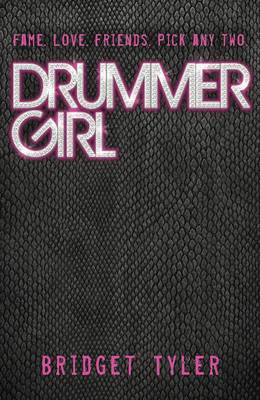 You’ve
clearly got a knack for both authentic US and UK dialogue – how does writing
dialogue for novels differ from screenwriting?
You’ve
clearly got a knack for both authentic US and UK dialogue – how does writing
dialogue for novels differ from screenwriting?