Friday, 13 December 2013

Past on Paper - 1940s Review - 'That Burning Summer', Lydia Syson (Hot Key Books, 2013)

Romney Marsh, July 1940. When invasion threatens, you have to grow up quickly. Sixteen-year-old Peggy has been putting on a brave face since the fall of France, but now the enemy is overhead, and the rules are changing all the time. Staying on the right side of the law proves harder than she expects when a plane crash-lands in the Marsh: it's Peggy who finds its pathetic, broken pilot; a young Polish man, Henryk, who stays hidden in a remote church, secretly cared for by Peggy. As something more blossoms between the two, Peggy's brother Ernest's curiosity peaks and other secrets come to light, forcing Peggy and Henryk to question all the loyalties and beliefs they thought they held dear. (Synopsis from Goodreads)


Quick warning: the odd spoiler on the horizon folks...

That Burning SummerWith that amazing title and a synopsis that strongly hints of a secret wartime love affair, you'd be forgiven for thinking that this book is an out-and-out romance. Ok, it is a bit of an out-and-out romance, but as much as I adored this particular relationship and the mammoth objects put in its path, the thing I took away was a different sort of fire - having the strength to cope with the day-to-day realities during some of the most difficult and tense events in history.

As with her previous book, Syson's writing takes a particular point and place in the past and opens it up in a way I don't think I've come across in YA before. All the research and attention to detail is evident, yet it never feels like you're sitting through a history lesson. Or maybe just like you're experiencing the best history lesson ever. This book not only sheds light on the contribution of Polish pilots to the war effort, but also the story of those who chose to stand by their pacifist principles in the face of overwhelming pressure and the ripple effects this had on their families. I was initially a bit apprehensive about the large part Peggy's younger brother Ernest appeared to be playing in the story ( just wanted to get to the kissing bits to be honest), but his journey and how this tallied with Henryk's experiences, ended up being my favourite part of the book. This is a tale about a different sort of war time bravery - of coping with overwhelming mental as well as physical hurdles as well as standing up for beliefs in the face of public opinion and convention. But with all the complex issues floating about, there is still a strong and powerful chemistry between Peggy and Henryk that was a  joy to read. Some of the scenes actually made my page CRACKLE, I swear. 

As with all the best historical fiction, this provides a new perspective on a period that has been depicted on paper many, many times before. It's a very welcome addition to the growing number of YA books set during this period that I've had the pleasure to read in the last couple of years. Not only does it make you think AND swoon, but there's also does a rather good sideline in suspense too. Oh, and the cover's ace as well. Seriously, what more could you want? 

If it turns out you DO want more, then have a read of my interview with Lydia Syson in which she discusses writing historical young adult fiction and the presence of politics in YA. You're welcome.


Tuesday, 26 November 2013

Interview: Bridget Tyler, Author of 'Drummer Girl'

You may remember my review of Drummer Girl from a weeks back - this addictive tale of a group of London school girls winging their way to LA to take part in a reality show is a great page turner with the snappiest of snappy dialogue. Today I welcome author and screenwriter Bridget Tyler to my blog to chat about pop culture, friendship and happy endings in YA...


What first drew you to writing for young adults and what were your favourite reads at this age? 

-         I love writing for Young Adults because I think great stories about growing up have more impact on us over the course of our lives as readers than any other kind of book. I still remember the books I loved when I was a teenager vividly – The Chronicles of Prydain by Lloyd Alexander, the Nancy Drew series, The Dark is Rising series by Susan Cooper, anything by Anne McCaffrey, Harry Potter… the list goes on. Those characters, and their journeys, helped me understand and survive my teenage years and I will never forget them. If I can tell just one story that makes someone else feel that way, then I will consider myself a success.


        Pop culture and current trends are a major part of Drummer Girl – what do you think are the pros and cons of writing about music in YA? 

-         Obviously, anything related to pop culture is dangerous in a book because it is bound to be out of date in a heartbeat. That’s why, as much as Drummer Girl takes place during a reality competition, I worked hard to avoid too many references to contemporary pop culture. You’ll notice as you read that most of the specific references made to bands are either to icons like Madonna and the Beatles, or to fake bands that only exist in the world of Drummer Girl. I even tried to stick to fairly classic styles when mentioning clothes, hair and make up while still being on trend. I used the framework of reality television and the music business, but I really wanted to be sure Drummer Girl was also about these five girls and their friendship not about the world they find themselves in.


Drummer Girl        You’ve clearly got a knack for both authentic US and UK dialogue – how does writing dialogue for novels differ from screenwriting?

 -       Not much, actually. Whether I’m writing a book or a screenplay, I read the piece out loud to myself many, many times before it’s finished. It’s really the only way to tell if dialogue is going to ring true or not, at least for me. The biggest difference with the dialogue in a novel is that you don’t have to make the characters say as many things out loud. In a script, I might need a character to say, “Wait. Mum can’t possibly know we cut school last week. She spoke to Mrs. James this morning and neither of us is grounded. What are you up to?” because otherwise the audience has no way of knowing what’s happening in the character’s head.  In a novel, I might do this instead:

Molly stopped short, starring at her sister as she dug through her dresser drawers. No matter what Jane said, Mum couldn’t possibly know that they’d cut school. She’d spoken to Mrs. James this morning and everything. They’d be beyond grounded if either had a clue. So what was Jane up to?

See the difference? Finding organic and natural ways for characters to say what they’re thinking out loud is actually one of the most challenging aspects of screenwriting.


Friendship is a strong theme in Drummer Girl – do you think this is something we should be seeing more of in YA and what other themes do you think deserve more attention? 

-         Yes, I think friendship, particularly female friendship, is highly under utilized in YA and in storytelling in general. Friends are such an important part of the growing up experience – good friends make everything so much better and bad ones can be downright dangerous, in the wrong situation. Romance is fun, and there’s a lot of that in Drummer Girl too, but it isn’t the only kind of relationship out there to explore. As for other topics that could use more attention, this isn’t exactly a theme but I have to say I think it’s important for YA writers to create more characters who are into science, female characters in particular. Too often math and science gets ignored, or even vilified, in teen literature. Those fields are both truly fascinating and very important for the future – we should be telling stories that encourage people to be interested in them.


        Drummer Girl has an incredibly fast-paced plot – how do you ensure that this is balanced out with strong characters? 

-         Well this is another trick that comes from screenwriting – plotting that doesn’t develop the characters is going to end up being boring and character development that doesn’t advance the plot has a good chance of ending up on the cutting room floor. The goal is to make every new twist and turn of the plot service the characters so that you don’t need to slow down and take a detour in order to develop them. 


      And finally, how important do you think ‘happy endings’ are in YA?

-        I think every story deserves the ending that best fits it. Some stories end well, some don’t. There are happy endings in Drummer Girl and very, very sad ones. And a few that are in between. That’s the way life is. The one thing I do think all stories should have is hope. I think there is a place in the world for bleak stories that lack hope for the future, but they aren’t the kind of stories I chose to tell, nor are they the kind of stories I like to read. 


I'd like to thank Bridget for taking the time out to answer my questions and in particular, those very handing tips on writing dialogue. So thank you Bridget - I'm certainly looking forward to your future YA titles! And it's always nice to find a fellow Nancy Drew fan...

Friday, 15 November 2013

I Need to Get Out More #5 - Wood Green Literary Festival

I don't normally manage to get out to literary or author events too often, so I was especially pleased to make it to a couple of events taking place as part of the Wood Green Literary Festival a few weeks back. I'm usually pretty clueless when it comes to doing write-ups (I suppose it's a good thing that I don't get the chance to do too many then), so I thought I'd take a different approach with this one as look at a few of the points raised and see how I can relate them to my own writing...


16120429The first talk was about Uncovering Ancient London and featured Lydia Syson and Catherine Johnson. Now, if you follow my blog, you'll know that I'm a big fan of Lydia's writing and you can find out her thoughts on political YA in this interview from a little while back. As you can imagine, it was very interesting to get a writer's perspective on how London history has made them tick. Catherine Johnson talked animatedly about how a trip to the Huntarian Museum inspired her to write Sawbones, a book that sounds delightfully gruesome and rich in the historical detail of the backstreets of this city. Lydia Syson talked about how she is a fifth generation Londoner, something that is quite rare this days, and how she has grown up to appreciate the rich history London has to offer, in particular, surprising facts about her family history.


That Burning SummerThis got me thinking about stories that my own family have told me. I've lived in west London on and off for the last ten years, but I was brought up in a commuter town after my parents moved away from their original west London haunt. My dad used to tell me stories about when he used to place Underground Hide and Seek on the tube with his friends as a teenager. You might be able to guess what it involved...basically, jump on a train, jump off at different stations and try to remain illusive to the person tasked to find you. I had completely forgotten about this story up until that moment, and now it's taking pride of place in my notes for something I'm planning about London set in the 1960s. It's nice to be reminded that I couldn't live anywhere better in the world when it comes to writing about the past, so thank you lovely authors!


When I Was JoeThe second talk I attended featured Keren David and Hilary Freeman discussing Edgy YA Fiction. This is of particular interest to me right as I'm currently working on a contemporary YA, although I don't know if I'd describe it as particularly 'edgy', but I suppose that was the whole point of the discussion - what does constitute edgy YA and how do you get the balance right? One of the issues that has been at the forefront of my mind recently (especially now I am at the editing stage) is swearing in YA. A while back, I read this interesting article by James Dawson which got me thinking about whether established authors are in a better position to have swearing feature in their books rather than debut novelists. However, both authors didn't think this was really the case and that all authors need to compromise to a certain extent on this depending on the market.


Lifted. Hilary FreemanWhen I first started working my MS, I was given some advice that I've always found useful - when it comes to swearing, don't censor yourself in the early stages - it's more important to get the first draft done and you can always compromise on this at the editing stage. Needless to say, my first draft was as potty-mouthed as it gets and I remember reading it back and blushing. As I'm going through my chapters now, I can appreciate that a little goes a long way in this respect. I think it's important to get my dialogue as authentic as possible (and this includes using swear words), but perhaps using too many can have the same effect as using none - it might only succeed in distracting from the story.


All in all, this was a great, informative afternoon, and I've very much looking to venturing north again next year. My only criticism would be that the talks were too short! I could have listened to them all for hours...


Monday, 4 November 2013

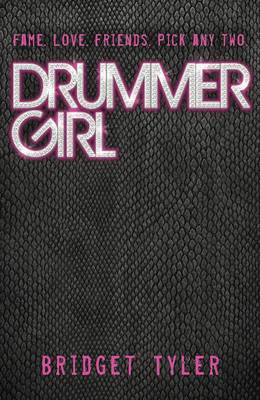
YA REVIEW - 'Drummer Girl', Bridget Tyler (Templar Publishing 2013)

It was supposed to be the summer of her life. Instead, 17-year-old Lucy finds her best friend Harper shot dead in an LA swimming pool. How did it come to this? Lucy Gosling is the drummer in Crush, a rock band formed by five London schoolgirls that has just won the UK semi-final of an international talent contest. But when the band lands in Hollywood for the big final, things are not quite as they seem. The band's lead singer, Harper, has just one thing on her mind - using sex, drugs and rock and roll, not to mention Crush itself, to win back her bad-news ex-boyfriend. Lucy must decide whether she's playing to Harper's tune, or setting the rhythm for the rest of the band (Synopsis from Goodreads)


When I read a YA that features a heavy dose of pop culture, I sometimes have mixed feelings - not because it's a a terrible subject to explore, not at all, in fact. More that I worry about the future. Mostly because I am a worrier in general, but also because I get all concerned about how relevant this is going to be in a few years time. But then, just as I started writing this review and waffling on about this, it dawned on me that reality telly isn't exactly a new phenomemon - how many years has The X Factor been with us? - so does that mean it's here to stay and that I am worrying about nothing? (probably). Anyway, my point in relation to Drummer Girl is that I shouldn't really be worrying at all. Because even though this book is full to the brim with pop culture and TV shenanigans, it embraces it and is all the better for that.

Drummer GirlSaying the plot is fast-paced does not do it justice - within the space of a few chapters, friendships have been shattered and reformed, a band has been pulled together, we moved from London to LA and we haven't even begun to touch on the tales of romance, addiction, underdogs, and glamour. But what I loved about Drummer Girl the most was the girl that held it all together - friendship. Even though action was most definitely the key factor, this is a book about friends and I don't think there's enough YA books where this is the driving force behind the story. Romances are very much on the periphery and it was all the more refreshing because of that.

The one thing I wasn't too sure about was the inclusion of a certain scene right at the start of the book. I wasn't going to mention it but now I've just realised that it features in the synopsis so I'm not really spoiling anything. I still can't make up my mind whether my knowledge of Harper's fate was necessary - on the one hand, I was desperate to find out how it came about, but on the other, would I have preferred to see more a twist at the end? I'm still undecided. Anyway, the book doesn't necessarily suffer from it and it's an interesting way to structure the story. And another thing worth mentioning is the dialogue. Occasionally, when UK characters feature in US novels, they either talk like they've just stepped off the set of Mary Poppins or they sound like they're trying to channel their inner Jason Statham, but the exchanges between the girls here ring true.

This book is gloriously addictive. I was halfway through it when we were struck by a power cut and I had to turn our flat upside down looking for an industrial-sized torch because I couldn't see any of the pages by candlelight.

And I really wanted to see those pages.


This book was sent to me by the author in exchange for an honest review.


Wednesday, 16 October 2013

I Need to Get Out More #4 - FILM REVIEW: How I Live Now


These days, about 90% of my movie-going habits consist of Saturday morning trips to the local old school cinema to watch the kids flick with the cheap tickets. So for me to go and see a new release, on the first day of its release, in the first screening, is a rare occasion indeed. Ok, so I didn't have much choice as to what time I could go to as I had to get back to pick the kids up from school, but whatever...


How I Live NowAnd by the way, yay from my first film review! To say I've been looking forward to this is a bit of an understatement. I first read How I Live Now a couple of years ago. I'd finished What I Was after picking it up by chance from my local library and then immediately deciding to consume the whole Meg Rosoff back catalogue. Actually, these books were some of the first YA novels I read (in my current period of YA love, not when I was a teenager) and consequently, they've have been burnt on my memory, not only for their brilliance, but also because they are partly responsible for my YA re-discovery.

However, it has also dawned on me that I haven't read How I Live Now since that first encounter a few years back (not sure why) and I have also lent my only copy to my best friend who has yet to return it, so I'm going to have to rely on my not very reliable memory when it comes to comparing the two. But, as you'll soon find out, the whole point of this review is that we shouldn't really be comparing the two at all...


How I Live Now (2013) Poster
As with any book-to-film adaption, my anticipation is always a mixture of extreme and on occasions, uncontrollable, excitement and a touch of terror, because I reckon it's completely natural to think that any adaptation might not live up to the original prose. But after we came out of the cinema, I realised that when it comes to How I Live Now, this sort of worrying was a bit of a waste of time. Yes, they made some changes to the characters and the story, but that wasn't unexpected. What was more important to me was that the overall power of the story remained intact and it worked as a film, rather than a version of a book. There was one particular addition that I don't remember in the book (but like I said, it's been a while) that was especially moving. And heartbreaking. And let's face it, just horrific. But it also summed up the whole feel of the film for me. I don't know why I wasn't expecting it to be quite as dark as it was (the book is about a war after all), but this was powerful stuff indeed. Made all the more intense by the contrasting images of beauty and despair.


My one quibble is that the central romance didn't quite have the effect I had hoped. I can see why they made certain changes to Edmund's character, but the way their unique bond was shown here didn't really work as well as it could have done. I could forgive the whole insta-love thing in the book because of the amazing prose, but on film, not so much. Saying that, I would have been quite happy staring at Edmond for two hours straight. Top marks for casting on that front...


This is an intriguing and beautiful film in it's own right, as well as a companion to the book, and I'm very glad that my uncontrollable excitement prior to viewing was justified.

Also, I recently found out that the girl who plays Piper also does the voice of Peppa Pig.

MIND BLOWN.


Tuesday, 8 October 2013

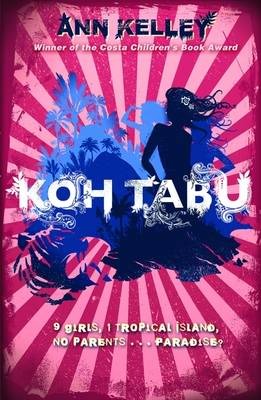
Past on Paper: 1970s YA REVIEW - 'Koh Tabu', Ann Kelley (Oxford University Press, 2010)

Fourteen-year-old Bonnie MacDonald couldn't be more excited for a camping trip on an island off the coast of Thailand with her fellow Amelia Earhart Cadets-the daughters of the men and women stationed there during the Vietnam War. But when a strong current deposits the girls on what their boatman calls the "forbidden island," things take a turn for the worse. What once seemed like a vacation in paradise has become a battle against the elements (Synopsis from Goodreads)

Gosh, this is a tricky one to review. But I shall try. You know that problem I was pondering in my last Past on Paper review? The one about whether to judge these books on how well they use their historical context? (I may have put it in a slightly more rambling, less coherent way). Well, this could perhaps be used as an example of not using your historical context to the best effect. Gah, I so wanted to love this one, because it sounded fantastic - a group of girls marooned on a far-flung Thai island in 1974. Doesn't it sound fantastic? 

Koh Tabu.Back to that old historical context thing. One of the many things that interested me about this was the time period, but if I hadn't known it was set in the 1970s, I'm not sure I would have been able to pin it down. Ok, so yes, it was set on a baron desert island, and they're not famous for their availability of cultural references, but there was very little in the voices or actions of some of the characters that felt like it they might stem from this time period specifically - more of just a general nod to the past. And I would have loved some more references to the historical events of the time too - how the war was impacting on them in particular - there were a few hints of family dramas, but this was very much a story about their current, more immediate crisis.

I think that might have been the problem, in that I was expecting so much and it just felt liked it lagged in a few areas. The story of adolescents stranded on a desert island isn't necessarily a new one, but the mention of it still promises so much drama and tension. Unfortunately, I didn't really get too much of this here. There are incredibly dramatic and sometimes tragic incidents, but I just wanted more emotion and build up. They seemed to just...happen. I've read a few books recently that have used a diary format to tell a story and I'm starting to think that this might be my problem - a lot of the immediacy of the events has been sacrificed to keep this method authentic and I don't think it really works for me as a reader.

That said, there are still some very surprising, unusual and memorable developments, including one rather beautiful, evocative encounter with a stranger, and Bonnie is an engaging guide who is fully aware of her own shortcomings as well as those of her companions. 

In some ways, this is a brilliant, original idea for a YA and the sheer nature of the girls' predicament kept me turning the pages until the end. But this didn't really work for me as a historical novel, or a particularly thrilling one.

Thursday, 3 October 2013

My YA Confessions #4 - Giving up is hard to do...

I have feelings. Mixed ones. And they're made even more complicated by the fact that I feel guilty about having them in the first place.

Yes, I'm talking about giving up on books before the end.

I'm thinking I shouldn't have even used the words 'giving up..' in the title of this post - it sounds so negative and defeatist, when I generally don't think I'm doing anything wrong. Or am I? Reading is for enjoyment, pure and simple (unless you count those years of enforced reading lists) and when a books fails to grip I'm surely more than justified in leaving it be and moving onto something else. So why do I feel so guilty?

It recently began thinking about this a lot more because it happened to me with a book by new author. I had read a lot of excellent things about this title and I loved the sound of the premise. But halfway through and I was floundering - it felt repetitive, I was bored with the characters, I really didn't give a rat's arse about any of it anymore. It wasn't the worse book I'd ever read by any means, but it just was not for me at that particular moment in time. And I felt even more guilty about abandoning it than I would have done jumping ship from a title by someone who has sold millions of copies. Should I have given a new author a fair crack of the whip? (gosh there's a lot of questions in this post - I do apologise). I guess the same does for reviewing books by new authors too - I'm always more reluctant to outright criticise them, although I'm guessing that a review on my teeny-tiny blog won't affect their sales too much. But I have no such qualms about being critical of more famous books.

Actually, I always have a few qualms about this sort of thing generally, but that's book blogging for you.

Let's just take a moment to appreciate the word 'qualms'. QUALMS.

Anyway, I think another reason for my guilt stems from being in the midst of attempting to write a book myself. I've only just come to appreciate the amount of time, blood, sweat and tears that goes into the process and to not give a book a decent go shot seems unfair to these efforts.

Does the standing of the author affect your decision on whether to finish a book or not, or do you think we should treat all titles the same?

Have you gone back to a book you previously struggled with and been pleasantly surprised?

Let me know you thoughts on this one...